Lessons for a New School Counsellor : Lesson 12 Take Time to Rejuvenate

Lesson 12 Take Time to Rejuvenate

Image

Here is :  Lessons 1-11

School Counselling can be a very demanding career. Although I dearly love what I do, I know it can be extremely exhausting as well as invigorating. We often hear difficult stories and that can be energy draining. For many students Christmas can be a tough time. It is important for us to take time to heal as well. I am so grateful that I can assist students with their concerns at this time of year, but I also need to slow down and pay attention to how I think , feel and act.

My student counsellor has worked extremely hard from September until now assisting students and their families with concerns that are not always easy. He too needs a break so he can regroup and come back to school refreshed. The following article discusses  compassion fatigue and is such an important topic for any new school counsellor, but also seasoned counsellors to pay attention to as well.

Click to access Self_Care_and_the_School_CounsellorArticle.pdf

Compassion … Be good to yourself …

So this Christmas season enjoy time with your loved ones, rest and rejuvenate , do something fun so that you can continue to make a difference in what you do.

Lessons For A New School Counsellor … Lesson 11

Lesson 11:

Lessons 1-10 can be found  here.

Engaging the students and staff is critical when it comes to school counselling. There are many ways to engage the students whether it is one to one or in groups. At the end of every session I check in with the student to see how the session went. I will often ask something like how are you feeling about what we talked about and did in session today? What is the one thing you will use as a result of our time together? This allows me to gage if I have been helpful and if there is something I said that the student connected with.

It is also very important to develop relationships with your staff. If they feel you are helpful they will most likely refer a student to you. We are all working together to enhance the success of all students so if students see us collaborating in their best interest while always maintaining confidentiality we will best be able to help them.

Engaging Staff. Get to know your staff. Take time to have lunch with them. It is good for you to take a break and get out of your office. Assisting students can be very draining at times especially if you are addressing more serious issues, so get out of your office and make time to recharge. Self- Care is important.

What are your ideas for student and staff  engagement ? Please share below.

I Will Remember … Will you?

Image

cc Image by Bill Barber

Remembrance Day is always a day of reflection. Our Remembrance Day Celebration at school this year was exceptionally well done. I had to choke back the tears several times during our ceremony. One of those remembered was Cpl Nathan Hornburg , a Bishop Carroll alumni who was struck by shrapnel during a mortar attack in Afghanistan while trying to repair his tank at the age of twenty- four ( the age of my own daughter) . I cannot imagine the grief and loss that his and other parents have had to endure. On this day Nathan’s dad joined us at Bishop Carroll in our Remembrance Day celebration. I could hear a pin drop. Our football team wore their jerseys in remembrance. As I looked across the gym floor I noticed one of our students with special needs was holding her hand over her heart as she sang O’ Canada. Another of the many touching moments. I must say I am so proud to be in a school where students , staff and many parents come together to pay tribute and remember.

Growing up on a military base I was surrounded by men and women who had a history of serving. My grandfather served in World War 2. This Haiku Deck is in tribute to him and the men and women like him who have served their country so that we may have the freedom that we do today. I am grateful.

Click here for : In Remembrance Haiku Deck

Below is one of my all time favorite Remembrance Day videos. It makes me stop and think every year. It is only a pittance of time.


I Will Remember This and Every Year Will You?
I Will Remember … Will You?

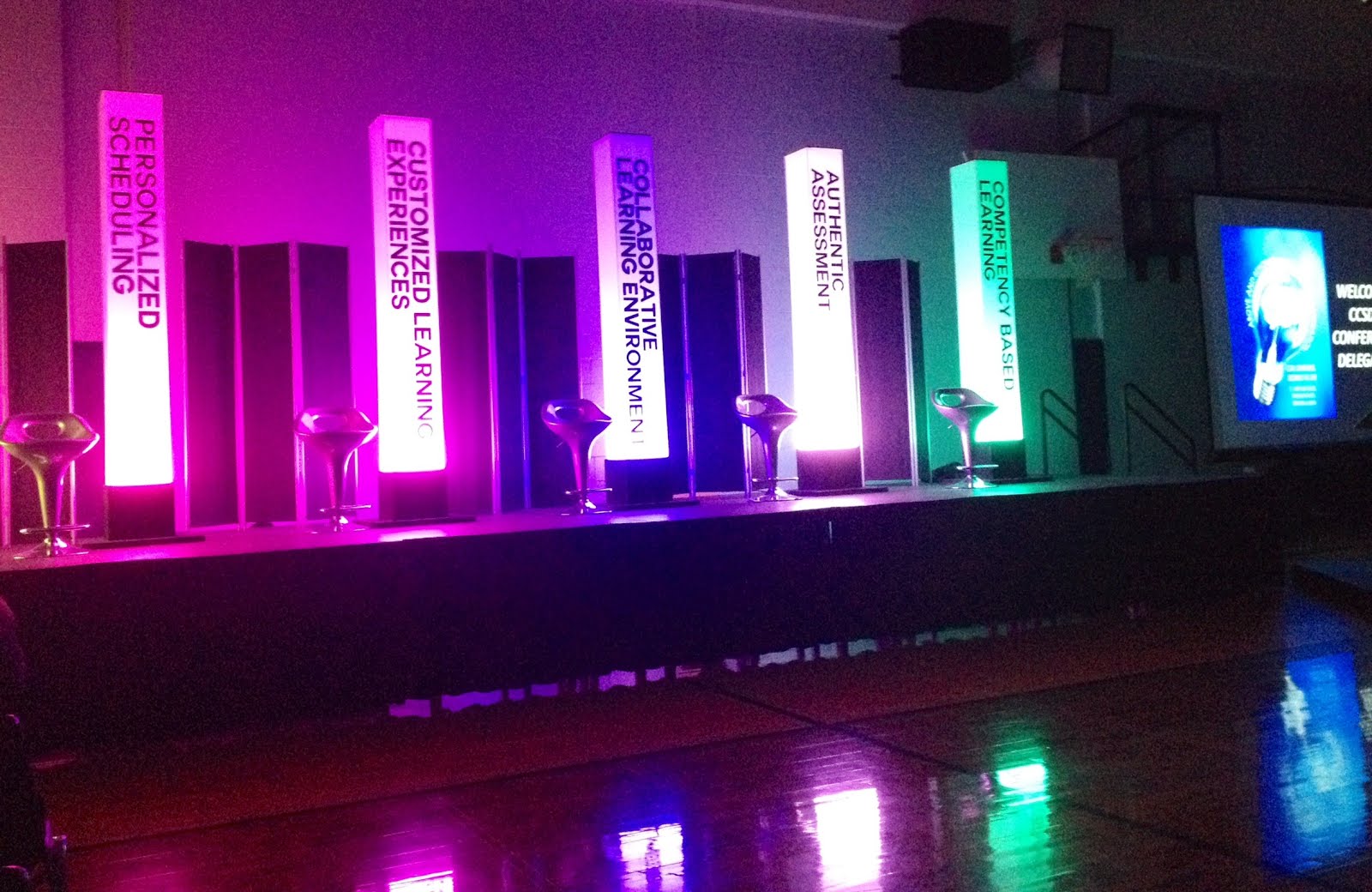
Canadian Coalition of Self-Directed Learning 2013

Click here for my @haikudeck   :   CCSDL Haiku Deck

Self- Directed Learning

“The basic assumption of SDL is that from birth to death, we live lives of learning: we first learn to function, then to live well, and finally to make a difference. Maurice Gibbons

What’s going on inside the building of Bishop Carroll is not only exciting, but innovative, educational and engaging. Not only are the halls of Bishop Carroll High School buzzing, but inside the offices of several educators learning is taking place.

Bishop Carroll High School , the oldest SDL school ( over forty years)  is a part of the Canadian Coalition of Self- Directed Learning.

Bishop Carroll works together with other members of the coalition to improve the self-directed experience of all the learners. These schools meet together on an ongoing basis as well as convene at a yearly conference to look at ways of improving the model for students.

As a staff member in a self-directed school I have never been in a school where so much focus and dialogue on instruction takes place on a regular basis. In fact, our staff has biweekly professional development meetings to ensure that we are able to collaborate on best practices and share new ideas. Teachers are continually focusing on how they can make things better for students in a self-directed learning environment.

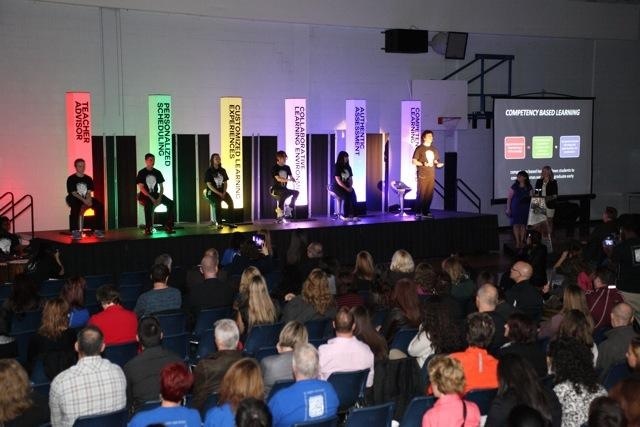
This past week I attended the Canadian Coalition of Self- Directed Learning Conference in Edmonton. While I love learning about ways to improve what we do, I so love connecting with other educators face to face.

What are conferences about for me?

Celebrating: For me the best part of CCSDL conference is the students and what they gain from attending a SDL school. I loved the opening ceremony which celebrated students. It was very moving and reminded me of why I do what I do.


Here are some great videos from some SDL schools :

No Glory without effort:

Dancing Like A Model

Re Imagine High School

Check out the great video from Thomas Haney

Bishop Carroll Over 40 years of SDL


Connecting with our staff as well as others: Often times I am so busy with my day I get very little time to connect with other staff members. Conferences can be a time to do just that wind down and connect. I had so much fun with the thirteen people who attended the whole conference from my school. We laughed, had fun, shared and connected. I know this experience will assist us in being better at what we do in our school. We now have some great shared experiences that we would not have otherwise.

Twitter also allows me to connect with other great educators who work in SDL schools. A special thanks to @EricDemore for tracking me down . We had a great conversation and I look forward to staying connected. Also thanks to my new SDL twitter pals @CarmenGartner and @mrs_haddad

Collaborating: I was able to share ideas with staff from other schools as well as my own. I am sending this out on a google doc so that as many as want to can contribute at a later date.

Continually Learning: I have yet to attend a conference where I am not able to take back some ideas and use them. This conference was no exception. I loved some of the ideas that came from attending Garfield_Gini-Newman.


Collecting Resources: one of the absolute benefits of attending a conference is the resources you get and I love this resource from twitter:


A gigantic thanks to St. Joe’s for their books and treats and so much fun! I know how hard it is to organize a conference and you were all amazing. Kudos to you all for the hard work and allowing us to have such a great time.

Being A Connected Educator Has Changed The Way I Think

Being a Connected Educator has changed the way I think about education and has helped me understand the lives of our students in a completely different way.

Nine months ago I was not a Connected Educator, but I wanted to grow professionally so I took the plunge and took a Massive Open Online Course called ETMOOC.  That changed everything.


I felt if I wanted to understand the world that our students live in then I too must learn what it is like. So for the last nine months I have entered into the connected online world and opened up a whole new world of learning for myself and the students I serve. Every time I am connected with others online I come away with new ideas and resources to share.

photo

cc by Catherine Cronin

For anyone who feels they are too old to do this, I hope I serve as an example. I started teaching in 1980 and I can still say that I LOVE what I do. Being a Connected Educator has helped me stay passionate about teaching and learning .

I believe it has helped me be a better school counsellor as now I can connect with other school counsellors #scchat #cscchat from around the world and we can learn together. As a result of being a Connected Educator I am more open and want to serve as one model for positive Digital Citizenship for our students.

Thanks to all of you who have shared your experiences, resources and optimistic attitude with me. This thanksgiving I am very grateful for you.

Mental Health Literacy Training

Image

This week I was extremely fortunate to be Certified as a Trainer for the Mental Health Literacy Program facilitated by renowned psychiatrist Dr. Stan Kutcher

I was excited to be able to participate, as I have known about Dr. Kutcher’s work for a while. I am happy to say all four days were absolutely worth it. I left feeling I had learned many things that will assist me in my professional work and as a result impact the lives of the students we serve in our school community. I also loved his dry wit which absolutely kept me engaged during the process.

The training has fabulous resources for school counsellors, educators and mental health workers to utilize. This program is one of the best I have seen in a long time. It is rich in content, research, and resources.

When it comes to mental health we want students to:

CONNECT

  • With someone they trust like their teacher advisor , teacher, coach or other significant adult in the school who can then assist them in connecting …

CONNECTING

  • With their school counsellor who can assist them in connecting with their doctor, health care provider and or parents to assist them with their mental health concerns

One of important things that  Dr. Stan Kutcher discussed during the four days is the difference between:

  • Mental Health Distress (one example lose your keys)
  • Mental Health Problem (one example a parent dies)
  • Mental Health Disorder/Illness (one example clinical depression)

Too often we do not normalize what young people are feeling. It is normal to feel sad after a break up, but that does not mean the student is in a clinical depression. We need to teach our young people the difference between distress, problem and disorder and the Mental Health Curriculum Guide  does just that. It teaches students and educators the Mental Health Literacy that they need in today’s world based on present day research on the brain.

If you want to learn more you can take a quiz here to get you started…

Below I will share a few of the fantastic resources available. You may want to book a training in your area if you do contact @TMentalHealth

Digital storytelling:

Panic Disorder:

Coping with suicidal thoughts:

http://teenmentalhealth.org/resources/entries/coping-with-suicidal-thoughts/

Depression:

I really hope educators from around the globe will consider this fantastic program as part of any initiative that will benefit every student and family in their school and community.

Plan for Making a Difference Online

Making A Difference Online

Digital Citizenship

1:10-2:00 p.m.


Susan TOPIC Digital citizenship 15 minutes

  • Haiku Deck  ]http://www.haikudeck.com/p/seBRTsh6wd/digital-citizenship-bchs
  • Be a Digital Citizen (2mins. 13 seconds)

http://youtu.be/FdEXijFXfD8

  • Digital Dossier Video:4 minutes 23 seconds

http://www.youtube.com/watch?v=79IYZVYIVLA&feature=share&list=PLvzOwE5lWqhRhUa0Zet5__9yfLX8NRvb3

Marc Global Citizenship

  • Global Digital Citizenship

Tremendous Growth of Easily Accessible Information

  • 1993 vs 2013

So much information, but…

  • Benefits vs problems

Tremendous Growth of Ability to Connect and Communicate

  • 1993 vs 2013

Ease of communication, but…

  • Benefits vs problems
  • In 2013, we have tremendous ability to access information and communicate with others…
  • In 2013 we have tremendous power to engage, connect, and advocate.
  • So what?

What is this ability for?

…or can we aspire to something greater?

Remember this?

Can we do better?

  • Syria – Civil War
  • Toronto – Street Car Shooting
  • KONY 2012

Peter Making Positive Connections

  • Remind 101

You can use social media to Make the World A Better Place

THINK before you post how are you going to do this?


What we want students to know:

  • Being online can make a positive difference in your life. Students throughout the world are doing great things online.
  • Act on and off line as if the world is watching because they are.
  • Learn all you can about being a good digital citizen. Google digital citizenship
  • Act with integrity on and off line
  • Be aware of your digital identity google yourself
  • Research creative commons and be able to explain it to a younger student.
  • You can build a positive reputation on line
  • You can be a positive creator
  • Your reputation is created by YOU

Digital Citizenship has a place in every school and we need to focus on the positive aspects of the internet as well as the things that concern us.

We want students to ask themselves:

  • What are the creative opportunities on the web?
  • What are the ethical dilemmas?
  • What are the rewards and the risks of being on line?

It is important to find great examples on the internet of students doing things to not only improve their own opportunities, but to improve the lives of those in their school, communities, and around the world. We would like to encourage students to look for these great examples as well.

I’d like to see schools focus on those students who Make A Difference Online by providing them with a scholarship that recognizes all the good they do online. Anyone interested in providing one?

Here is a great example of students doing amazing things:

http://www.youtube.com/watch?v=Qo2S1fdhGmo&list=UULSeLxP1JlUEmz_FKNZsXVQ&index=1&safety_mode=true&persist_safety_mode=1&safe=active

As educators we need to create our own digital footprint and model good Digital Citizenship for our students. Taking Care Of Your Digital Self highlights the importance of a positive digital presence.

When teaching Digital Citizenship we need students to recognize that they need to be the same person ON and OFF line.

We need to ask students:

  • If I were to look you up online what would I find?
  • What would you want others to find?
  • If your grandmother googled you would she be proud of what she found?
  • What is your digital tattoo? Find out more information at http://digitaltattoo.ubc.ca/

We want students at Bishop Carroll to show great citizenship skills:

  • Positive attitude
  • Proactive
  • Connected
  • Engaged Thinkers
  • Ethical Citizens
  • Entrepreneurial Spirited
  • Sharing,  and creation of new knowledge and learning to help others.


Here is an activity students can do.: Choose what happens next … a you tube video that is interactive

http://youtu.be/pGkaw44-Ql4

Digital citizenship is so important and what we do with students matters.


Lessons For A New School Counsellor Post #2

IMG_3679

Every September I forget just how unbelievably busy a school can be and most school counsellors are not just counselling they have several other responsibilities. That is an important lesson for all school counsellors. Be aware of all that you may be asked to do.

Here are some new lessons. Lessons 1-6  are here.

Lesson #7

Be patient with yourself. It takes time to learn all the things you have to know as a school counsellor and often times you have several roles to play. You may be in a classroom part time teaching and attempting to do a full time job at counselling even though you are half time counselling /half time teaching. You can’t do and be everything for everybody.

Lesson #8

Lists help. Having lists will help you do and follow up on all the activities you are responsible for.

Lesson #9

Technology helps. This year we have a master calendar for all our counselling activities on Outlook. Each calendar is synched with our counselling Admin. Assistant and she makes sure it is coordinated. We discuss our monthly activities in our weekly Counselling team meetings. This keeps us all on track and aware of what is happening. We utilize technology in numerous ways in which I will discuss over the course of the school year.

This year in September we held three different seminars . One on Digital Citizenship, four on Counselling and one on scholarship information for students in grade 12 . Throughout the year we will offer several more.

The first was held at our grade 10 retreat with four hundred new grade 10’s and I will post more on that later.

The second was held in our computer room where we discussed :

  • What school counsellors do
  • What services we offer
  • Confidentiality and the limits
  • Resources we have available like our school counselling website, our counselling course that we offer on D2L, our school twitter site and our school facebook page

The third will be held in the computer lab with access to a fantastic livebinder.

Here are some links you may get some ideas from:

http://www.haikudeck.com/p/seBRTsh6wd/digital-citizenship-bchs

https://sspellmancann.jux.com

http://www.haikudeck.com/p/L1wGnD3MT0/what-high-school-students-need-to-know

Scholarships, Student Loans, Occupational Information livebinders.com/play/play/830830


Lesson #10

All school counsellors should be trained in suicide prevention and if they are not they should be trained in their Masters programs. School Counsellors often have to assess for the risk of suicide. Yes, even in the first few days of school when students are back in September. School Counsellors need to be prepared to ask for assistance if they are not trained. This is not something you should handle alone. It can be very scary when a student says they are thinking about suicide and you are not trained to know what to do. Even when you are trained well it can feel overwhelming and so it is important to debrief with another counsellor. In our district all school counselors have to train every two years as well as do a refresher course. This is so important for our students at risk. School counsellors can and do save lives.

As I reflect on the work we do, I think about what we do and how important our role as school counsellors are. Exhausting at times, but so worthwhile. To all new counsellors hang in there. It is and has been the most rewarding career for me. I still love what I do in year 33.

Marc’s reflection on his first weeks as a high school counsellor:

Starting a practicum placement is intimidating.  I am fighting the  presence of ‘imposter syndrome’, feeling somewhat ill-prepared and anxious, hoping that my lack of experience is not apparent to the students or staff in my words or behaviour.  I am fortunate to be in a familiar environment with a supportive supervisor and colleagues, but it will take time to feel comfortable and confident.

It’s been a steep learning curve at my practicum placement.  At first, I was frustrated because the established counsellors were busy with a full schedule of student clients, while I had a slow trickle.

While I recognized that some students may prefer a veteran counsellor, I soon realised this disparity in appointments was primarily due to the students’ unfamiliarity with me, rather than an indication of their perception of my competence or a sneak preview of my upcoming caseload.  The number of students coming for appointments has picked up, but I have come to appreciate any opportunity I have to reflect, consult, complete documentation, or catch up on additional work.  Further, after having an experience assessing an at-risk student, I’ve learned that a gradual immersion into client contact allows me to build competence and confidence at a comfortable pace.  I was not ready to assess this particular client, and missed several key aspects of the necessary process.  It was a good learning experience, helping me to remember the importance of policy and training, but also to pace myself and appreciate any lighter schedules.


 

World Suicide Prevention Day

Today is World Suicide Prevention Day. As School Counsellors we need to talk about this very important topic. We need to break down the stigma, one conversation or one assembly at a time.  Our students could be at risk. Sadly, sometimes we can miss the warning signs.

In our opening school retreat we address this issue directly and let all students know we are there to assist them to provide HOPE and support.

We let students know that even if they are not at risk he/she may need to help a friend. Evidence suggests that youth are more likely to talk to their peers about their thoughts of suicide so we need to reinforce in students that they cannot keep suicidal thoughts a secret. We would much rather they had an angry friend than a dead friend.

Later this month we have every grade ten student take a manditory suicide prevention workshop through Canada Mental Health.

Our HOPE is that all students will reach out and get the help and supports they need. Our young people are precious and we want to keep them to understand they have a purpose and are meant to be here.

Digital Citizenship and the New School Year

Image

One of the most important topics I believe a school can cover is Digital Citizenship. So I went on a twitter search of the top two videos on this topic. If I am going to present to the students in my High School ( which I am ) I want the best of the best. Which videos rate as the top two I think our students should see? So I asked the question to my PLN “ If you had to choose the top two videos on Digital Citizenship for high school students what would you choose?”

You would think this would be easy to answer, but it is not! I am aware of lots of videos on Digital Citizenship, but which ones do I believe I should present to all our new grade 10’s? I’m not sure yet.

Some of the responses I received were:

  • great question let me know what you find?
  • try this for starters thanks Tom Whitby @tomwhitby
  • tough call, but here is a nice collection of digital citizenship videos  thanks Eric Sheninger @NMHS_Principal
  • thinking on this one
  • I’ve been looking too … please share
  • Retweets and assistance because of @courosa. Thank you so much as always Alec for your help with this. I am continually inspired by you.
  • The search produced ideas , but no top videos people would choose to show to a large group of high school students and I understand why. There are so many to choose from and how to decide which one would be best is not easy and depends on the purpose. Fortunately I will be using several so no real need to find the absolute best.
  • I’ve added videos and ideas to my digital citizenship livebinder so thanks to all of you on twitter who contributed.

In the process of thinking about this important topic I had some insights that I thought were useful.

  • What about asking the students to watch five videos (of their own choosing) on the topic of Digital Citizenship) and pick the ones they think are the top two?
  • What about having students research and create their own videos? Challenge them to create one that other students would pick as their top two.
  • What do students think should be the criteria for picking a video as one that should be in the top two?
  • What do educators think should be the criteria for picking a video that should be in their top two?
  • What are the essential components of a great assembly on Digital Citizenship for high school students?
  • If you had an hour to present to all new grade 10’s on the topic of Digital Citizenship, what would you present?
  • What do I really want our students to be aware of?

What I do know is that I want our students to think a lot about this very important topic and as a counselling team we will be covering this topic throughout the school year.

  1. I want to model positive digital citizenship
  2. I want students to know that being online in a positive way can make a positive difference in their life. Students throughout the world are doing many great things online
  3. I want students to learn all they can about being a good citizen online and off
  4. I don’t want to scare students.  I want to inform them and assist them to act with integrity on the web
  5. I want students to be safe, responsible, and use good judgement online
  6. I want students to be aware of their identity
  7. I want students to learn and understand creative commons
  8. I want to help prepare students for ” a society full of technology” Ribble
  9. I want students to be able to be learn to create and be proud of what they create and learn and share on the net
  10. I want students to be able to “understand how networks work ” Rheingold

Here is  a past post that I wrote on the topic: Making A Difference On Line where you can find other resources on this very important topic.

As school counsellors this year we will be:

  • sending Digital Citizenship tweets to students on the school twitter account as well as through remind 101
  • posting articles and videos on the school facebook account
  • sending out @HaikuDecks on the topic to students
  • sharing information on the topic on our school counselling website
  • focusing on where we can add information on Digital Citizenship in our learning guides
  • posting information on bulletin boards (our students look at these) caught them many, many times

I especially want students to know as Seth Godin says, “Everything you do now ends up on your permanent record. The best plan is to overload google with a long tail of good stuff and always act as if you are on Candid Camera because you are”.

We need to be congruent on and of line and we need to model integrity and teach this to our students . This is a  process and we will slip up along the way,but for today we will do and be the best we can.

I certainly recognize that helping students be more aware of digital citizenship is the responsibility of teachers, parents, educators and the society as a whole , but as school counsellors we can assist students in their understanding of this very important topic. I would love it if you would share your ideas and tell us what you think some of the best videos and ideas are around this topic. Please comment below if you have ideas. This is a work in progress.