Life is a fleeting journey, we never know what tomorrow will bring and it’s so easy to get caught up in the daily grind and forget to cherish the moments that truly matter. Here are some tips to help you embrace each day with positivity and gratitude.
Start Each Day In A Positive Way
Begin your day with a positive mindset. Whether it’s a smile, a morning meditation, or simply taking a moment to appreciate the sunrise, which I do a lot of, setting a positive tone can influence your entire day.
Take time to celebrate the small achievements and happy moments throughout your day. Whether it’s enjoying a walk along the beach, witnessing waves crashing against rocks, or sitting with loved ones by the Mira River, these moments add up to a fulfilling life. I start my day most days by watching the sunrise. I go for a daily walk with my neighbours and I look for ways to make my day as positive as I can.
End Each Day With Gratitude
Reflect on your day with a sense of gratitude. Acknowledge as many good moments as possible. Learn from the challenges, we all have them. It isn’t always easy to embrace the moments, but when you do you will feel much better about yourself and life. Appreciate all the beauty around you. It’s a simple yet powerful practice that can transform your outlook on life.
During stressful times it is not uncommon for us to be impacted by psychosocial factors such as excessive worry or sadness. For those who have a diagnosed mental illness, additional stresses further exacerbate the condition. As a result of excessive worry we may develop habitual, exaggerated, or irrational thought patterns called cognitive distortions.
We all have these distortions. They are normal. However, they can cause us to perceive reality inaccurately. In other words, our brain is tricking us. Instead of seeing ourselves as calm and capable, we see ourselves as just the opposite. Our beliefs become negatively distorted and we process all thoughts through a negative filter. However, if we learn to challenge and ultimately change these negative thoughts, we cannot only change how we think , but also how we feel. How do we change these cognitive distortions? First, we need to understand what these distortions are and if any of these distortions apply specifically to you. Are you tending to view things more negatively than they really are? View the following 10 most common distortions and decide which ones you may be using most frequently.
All or Nothing Thinking (Black and white thinking) You might say to yourself : “This day is awful. I can’t do anything fun anymore. I feel like life is so difficult. What’s the point of getting out of bed? Nothing ever works out the way I want it to.”
Overgeneralization: (Attributing a negative outcome based on one single event or incident) “I tried to practice music on my own, but I just could not focus. Everyone else seems to be able to do it. It must just be me who can’t. I failed when I tried to do my Biology . What’s the use of trying? I will fail every time I try.
Discounting The Positive (Believing the positive attributes you possess have no value) “ My teacher told me I did really well in the last practice, but I know he’s just saying this to make me feel better because I have been feeling sad lately.”
Mind Reading : (Assuming that you know what other people are thinking without having any evidence) “My dad seemed really quiet today. He didn’t even say good morning. I think he’s angry with me.”
Fortune Telling; (Jumping to conclusions and predicting future events based on a past events) “I messed up on the last practice. I’m never going to get this music piece correct.”
Magnification (Catastrophizing) or Minimizing: (Binocular Trick: When viewing through binoculars, it allows us only to focus on what we are looking for. We either magnify or zero in on a specific feature, not allowing for a true perspective or view. ) “I only got a 60% on my last quiz. I’m probably going to fail this course. I got 90% on all my tests but I am really unsure whether I will have the marks needed to get into my university program of choice.”
Emotional Reasoning; (Allowing our feelings to interpret our reality. I feel it, therefore it must be true.) “I feel my life is totally out of control because of x .” “I feel worried, therefore I must have anxiety. I feel sad, therefore I must be depressed.”
Should Statements; (Stop Shoulding on Yourself!) “I should be helping out more at home during this difficult time.” Or: “ My parents tell me every day I should feel lucky because others have it a lot worse than I do. ”I should be doing better in school even though life is very difficult right now. “I should get 90”s and if I don’t I am a failure.”
Labeling and Mislabeling; (Attributing one error or decision as a specific trait) “I messed up on the last question on the test. It was so easy. I am such an idiot.”
Personalization. (Blaming yourself for everything that may go wrong. It’s not all about you. Others may own a part or all of the situation) “My parents seem to be arguing a lot more. Maybe I’m irritating them. I need to be better so they don’t argue so much.” Or “My relationship ended because I was not exciting enough and could not spend more time with _____ . “
You may have recognized yourself in some of these distortions. By now you will probably have identified the ones that ring true for you. So in order to remain calm and capable, you must remind yourself of how counter productive these distortions can be. Instead, take time to reframe your thoughts so they more clearly reflect the true picture. Take each cognitive distortion find an example that you presently do and find ways to reframe each one.
Enlist friends, family members, coaches, teachers or anyone you trust to help you better challenge these distortions. This provides for a wider view, as opposed to a narrow lens approach. You can now see yourself from a whole new perspective, as a calm, capable, young person, better able to manage the ever-changing world around you.
None of us expected this (a global pandemic ) and even for those of us in the field of helping others, it does bring some anxious feelings so imagine what our youth are feeling.
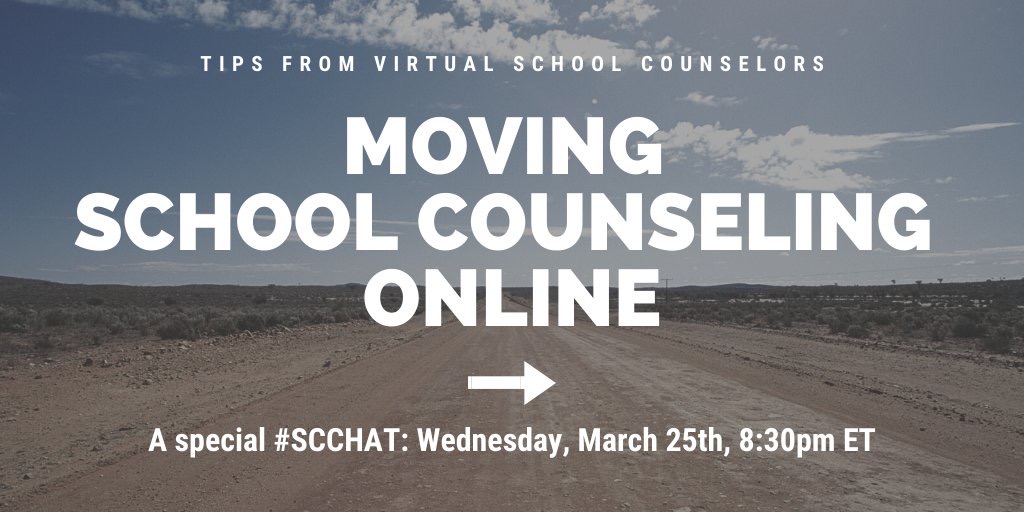
Schools in Calgary are closed for an indefinite period, maybe even until September. So educators and School Counsellors will be looking for ways to support their students using technology ( so grateful to #etmooc for giving me the ideas, confidence and tools to help ) . As a retired School Counsellor there are ways I can help online and I plan to work with my fellow colleagues across the borders in #scchat to do so. As always thanks to Erin Mason @ecmmason for your leadership.
Please join us in this chat as we explore ways to help each other. that’s 6:30 pm MT
I have many resources that I am always willing to share from a school counselling perspective. I am thinking of all school counsellors across the world this week as you find ways to continue to champion and connect with your students. Find us in #scchat and we’d be happy to help.
RESOURCES: I am hoping some of these may assist you
Counselling Resources in Calgary can be found here
For Teachers and Students Personal Wellness binders can be found here
For mental health resources 18 plus look here or maybe you need a chill playlist for teens or just a fun little spinner for some positive thoughts or maybe you just need some motivational messages.
Exercise is one of the best ways to destress. I know I plan on getting outside and walking as much as possible in the next while. Maybe you will want to #walkalongwithme , virtually that is as I’ll be social distancing and thinking of ways to be helpful in this unprecedented time what about you?
As a counsellor it is easy to share what might work . Practicing it and living it is the real test to functioning well.
Here are a few strategies and tips that I not only have recommended to others, but have used myself:
Wake up each day and try a little self talk Just for today I will make this the best day for me. No matter what the situation is we can all cope with things a little better if we break things down in chunks.
Just for this minute I can
For the next hour I will
Just for today I can
If we just think about today , not yesterday or the future life gets a little easier . I use this as much as humanly possible. I can do most anything just for today. At the end of the day I remind myself to be grateful. I was able to do a lot of things much better just for today over the years.
Journaling Writing down your thoughts is a good thing. It’s a great way to release how you are thinking and feeling. There are so many things to write about . It’s also a great way to understand your thoughts so you can challenge them when necessary. I have learned a lot about myself through journaling it’s a great way to self reflect.
Step away and step it up We all need to step away from situations. Taking a little breather by going for a walk is something we all can do and yes you can fit it into your day. 15 minutes in morning and fifteen minutes in the evening . I walked every single day last year and was very proud of myself for reaching this goal. This year I am still walking a lot , but don’t feel the need to do it every single day. I play pickleball singing and dancing and moving as much as possible. Do whatever works for you , but exercise. It is the best wellness tip and walking is free.
Social connections They are vital to my wellbeing. I have cultivated and still do my friendships with people. They matter to me. Find ways to be a good friend daily and recognize you are never too old to have new friends in your life. Stay open and let others be there for you as well as being there for them. Surround yourself with positive people and let go of the negative people who do not help or support you.
Spend time taking care of yourself When you help others sometimes you let go of taking care of yourself, I know I do. So take back you and nurture yourself like you would others. Treat yourself with tender loving care.
Take time to talk to a counsellor We all need a little support now and then. I know I have. It is OK to reach out to a counsellor or therapist. It takes strength to talk about what’s really bothering you. Having an impartial listener to help eases some of the burdens we all carry around so reach out.
It’s not always easy applying what you know works in life , but the benefits are there for the taking so just for today try one thing that you already know works for you and apply it. Your day might just get a little brighter and you’ll see the world just a little differently. I know just for today I will.
I hear it all too often, youth saying they have anxiety when what they really mean is that they are feeling anxious. If you listen to the news you would believe that our youth are in crisis . The data would suggest otherwise 1 in 5 Canadians will experience a mental health disorder in their lifetime . It’s true and needs to be addressed and has been for the past 20 or so years. The stats have not changed. What’s also true is that 4 out of every 5 Canadians don’t have a mental health disorder and it’s up to us to teach the difference between a disorder and everyday feelings that we all have. Some may need the assistance of a professional to understand the difference. Your School Counsellor is a good place to start. They are trained professionals who understand the difference and can assist in finding supports.
For the 1 in 5 youth that will experience a mental health disorder in their lifetime we need to assist them in getting all the supports necessary. For the youth that are experiencing distress over a multitude of concerns we must also listen and support them , teaching them how to cope with life’s challenges and concerns. Supporting youth with their feelings helps us understand what steps to take next. Their feelings are important , so we must not dismiss them.
Words do matter and helping our youth become literate when it comes to mental health can have a positive impact. If you need resources and ideas on how to make that happen check out teenmentalhealth.org. You can also find more information on anxiety here and here.
If you are wondering whether a youth truly has an anxiety disorder, some waitful watching may be in order. Don’t be quick to jump to a diagnosis ( and a reminder that you must be qualified to do so ) even then waitful watching is a good idea.
Some questions to reflect on :
Frequency : How frequent are the anxious feelings? Once or more a day , once a week , once a year?
Duration: How long do the feelings last? A few minutes, hours , weeks , months?
Intensity: Does the youth avoid situations because they are too anxious to cope? Is the anxiety taking control of them instead of them controlling it? Are they having trouble coping with everyday life because of their anxiety?
Have they seen a medical doctor to rule out any other medical concerns?
As a counsellor the way you begin your day can impact you and others around you. So beginning your day by being good to yourself is a great way to start your day. Ease into your day if you can by getting to work a little early. Take time to listen to positive podcasts, nice music or just turn the radio off and be quiet on your drive to work. Whatever works for you.
Make sure you take time for lunch. Get out of your office and eat with colleagues or go for a walk, I can’t stress how important this is. This is essential for your self care, so just do it! After your crazy busy day and I know you had one, take time to just breathe and wrap up your day by listening to music while you write your notes and prepare for your next work day. I’m interested to know how do you start each day?
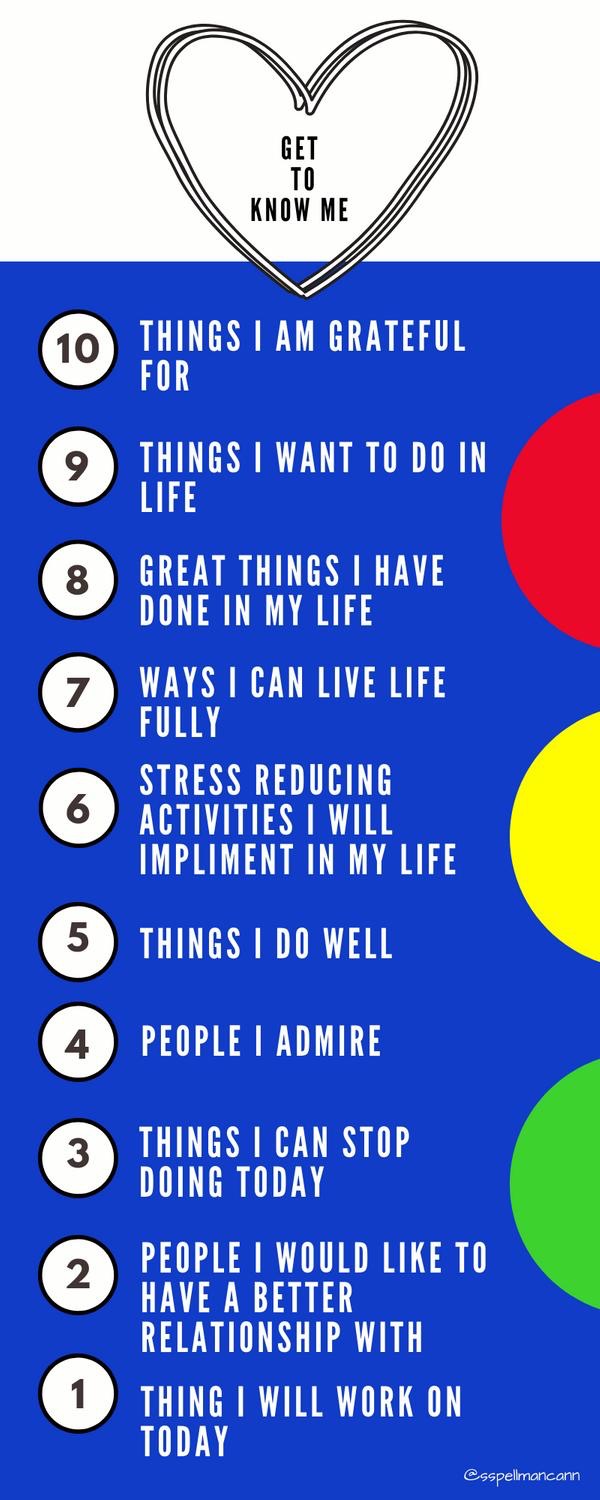
At this time of year I know some of you are already preparing for next year, so I thought I’d add a little way to get to know your students and their stories better. If you’d like to do this yourself and share with me, that would be great too. Have a fabulous summer. You deserve it!












 Counsellor Talk : Connecting with those who want to make a difference.