Teen Mental Health Programs: What Works — and Why — in Schools?

Stan Kutcher is one of the leading experts when it comes to mental health. “Stress can be good and bad, Kutcher reminded us, and we need to be able to distinguish among the three types of stress responses identified by the Harvard Center for the Developing Child”:
1) positive (daily)
2) tolerable (regularly)
3) toxic (extremely rare)
“Instead of pathologizing “stress” as “anxiety,” what children and youth need most is “inoculation” to help build a more robust stress immune system.”
How do we inoculate stress ? It starts in early childhood and continues throughout adulthood. You may wish to check out one of my previous blog posts on coping skills.

Paul W. Bennett's avatarEduchatter

Seeing some 400 teachers and school service providers flooding into the Halifax West High School auditorium on July 20, 2017 was an eye-opening experience. In the middle of the summer, they committed time to a two-day conference focusing on child and teen mental health. Led by Dr. Stan Kutcher, the Mental Health Academy was filling a real need in the school system.

With the news full of stories warning of a “mental health crisis,” teachers in the K-12 system are feeling anxious and more conscious than ever of their role in the front lines of education.  What Dr. Kutcher’s Academy offered was something of a tranquilizer because he not only rejects the “crisis” narrative, but urges classroom practitioners to develop “mental health literacy” so they can “talk smart” with students and their parents.

The fifth edition of the Mental Health Academy, initiated in 2006 by Dr. Kutcher, studiously avoided…

View original post 650 more words

If We Know How to Do It … So Will They

With the new emphasis on digital leadership , I strongly believe we as parents and educators need to learn how to develop our own digital identity. How can we truly help guide students to learn concepts of digital citizenship , becoming a digital agent, a digital interactor, etc?

How can we help young people learn how to create change in their community or how to make the world a better place online if we don’t fully understand how to do so ourselves?

Joanna Sanders asks  great questions: What does this new emphasis on digital leadership look like in the classroom? How will this benefit our students?

Learning how to be digital leaders starts the day children are born and is a never-ending lesson. How do we celebrate all the good that our youth do while teaching them about privacy, collaboration and how to vet online sources? How do we become the models they need?

Let it begin with me I say … and yes it is never too late. I started learning how to become a good digital citizen almost five years ago after joining #etmooc. I am still learning today and take every opportunity I can to learn. I have made many mistakes along the way just as I did in my own parenting, teaching and counselling , but I really try to learn from those mistakes and model for others what I am learning daily.

I think we need to give educators the time during their days to learn along with their students. Being proactive means we need to learn alongside the students trying to master these skills we want them to have. They can teach us and we can teach them. If we want to drive change through technology we need to face the fear ourselves and take positive risks online. You may wish to join communities like #immooc, where you will find educators learning every day.

Digital citizenship is essential to what educators do. Join me as I learn along the way. You may find a few tips here .

Digital Citizenship Lessons are vital. Empowering proactive digital learners is a process. If we know how to do it , they will too . What do you think?


Anxiety: Threat or Gift?

E50C37D5-24B2-4653-9B6B-40D1F4D9434E

A guest post by : S.Helen MacKinnon

Often I am asked the question, ” Why do so many kids today suffer from anxiety ?” There is no easy answer to this question but there are many more questions that we need to ask. In particular, “What is it that appears to be causing such an increase in child and adolescent anxiety? Is it related to social media?  Are we over pathologizing what may be normal reactions to stressful situations in our environment. According to Dr Stan Kutcher, a leading psychiatrist from Dalhousie University, “anxiety is a gift we have inherited from our ancestors to protect us from threat and to kick-start ambition; to fight it we have to face it.” In order to “face it” we need to  first of all understand what is happening and then respond to it in a manner which will allow us to maximize the outcome.

In other words we can use the anxiety or stress, to benefit us in our day-to-day functioning.  If we see it as a gift, we respond from a totally different  repertoire or mindset than if we see it as a threat. A gift is something positive, something we welcome, something that may make things easier for us, or at times may challenge us and help us grow. How can we work with our kids to help them understand and see anxiety as a gift? What are some strategies that will help them develop a different mindset?  Additionally, what part does social media play and are we, as parents, educators, and counsellors, contributing to the mindset of threat or gift? In my next guest post I will explore these very questions and discuss ways to unpack the gift of anxiety.


Optimism

As a Counsellor or Psychologist you are surrounded by people who are not always optimistic. Is it important that you remain optimistic? I absolutely think it is essential.

How did I get to be an optimist? For me I believe there is a genetic component to why I am the way I am. I also believe it is because I have chosen to cope in the best possible way to the many negative things that have happened in my life. It is unrealistic for me to expect that I will feel optimistic in every situation, but in every situation I attempt to look for the good and what I can learn. Does this mean I look through rose coloured glasses? No, I fully recognize that there are some situations I have not handled well or times I have felt very sad or hurt or unloved, but I have worked very hard in my life not to stay in negativity. I feel my feelings , reach out for support and move towards a more optimistic outlook.

I surround myself as much as possible with people who lift me up , not tear me down. I hope you too will find the good in each possible moment you can , not just for you, but for the people you serve or love.

Hope doesn’t mean denying reality , but looking it in the eyes and remembering the heroes and events that challenged injustice in the past.

Rebecca Solnit

A NEW TEACHER COUNSELLOR GUIDE FOR HAIKU DECK

IMG_0751

Picture Made with Haiku Deck
There are so many ways to use Haiku Deck and any teacher and counsellor can do so with students. I strongly recommend you check out the new teacher guide for step by step information that is extremely helpful. SCCHAT this is a great resource for you.

Supervising School Counsellors

img_2792

I have been very fortunate to work with and supervise many great School Counsellors. I learn from them and they learn from me. Giving back matters and I believe seasoned School Counsellors should supervise our future School Counsellors. It helps us stay on top of our profession and allows us to be in a constant state of learning.

According to Bradley and Gould (2001) all supervision models should incororate a collaborative relationship which focuses on the indiviuality of the supervisee and one that facilitates growth and autonomy.


Some things to reflect on if you are ever in the position of supervising a student counsellor :

  • Have they developed a conceptual map with each client?
  • Which theoretical models are they adding to their toolbox?
  • What actions should they take in varing situations?
  • Are they developing the instincts and comfort level required of a beginning counsellor?
  • Are they aware of professional informed consent and record management for School Counsellors? 
  • Are they developing a leadership role within the school?
  • Are they being culturally sensitive?
  • How are they collaborating with staff? How are they optimizing their role?
  • Do they understand how a comprehensive counselling program plan is executed?
  • Have you discussed limits to their scope of practice?
  • Have you let them know they will make mistakes, misjudge situations, and lose track of sessions , but time and experience will take care of all of this.
  • Have you let them know lifelong reflection is essential?
  • Have you discussed dual roles, boundary issues and confidentiality?
  • Have you discussed ethical issues as they arise?
  • Have you modelled on a regular basis your counselling skills?
  • Have you updated read about updated models of supervision?
  • Are you in a constant state of professional development?
  • If you are a psychologist are you constantly aware of your own code of ethics?
  • Do you model and practice self- care strategies yourself?

The above are but a few thoughts to get you started. For more information on supervision and supervisory practices click here. The ATA Council of School Counsellors also offers excellent resources for a new School Counsellor.

Lessons for a new School Counsellor Lessons 11 and 12

Lesson 11

IMG_4625 2

Engagement and Collaboration

Collaboration is key to being a 21st century school counselor and working with teachers is one of the greatest collaborative efforts school counselors can make on behalf of students.  Teachers and counselors have to work together to maximize their impact on student achievement and this can be done in a variety of ways.  Whether cross-walking standards for classroom lessons or talking about individual students, this partnership is essential to helping students to be successful.

Julia Hartline

Engaging students and staff is critical when it comes to school counselling.

Student engagement is vital. How we do it can vary.   With so many students in a school you will most likely need to engage students online as well as in person. There are many ways to engage the students whether it is one to one or in groups. Learning to engage online was not easy for me , but it was super helpful. If you are a new School Counsellor #immooc  can help with this.

Here are some things I like to do and ask with students in person.

  • At the end of every session I check in with the student to see how the session went.
  • I will often ask how are you feeling about what we talked about in session today?
  • What is the one thing you will use as a result of our time together today? This allows me to gage if I have been helpful and if there is something I said that the student connected with.
  • Find ways to collaborate with students on student led initiatives on bullying etc.

Engaging Staff. Get to know your staff. Take time to have lunch with them. It is good for you to take a break and get out of your office. Helping students can be very draining at times especially if you are addressing more serious issues, so get out of your office and make time to recharge. Self-Care is important. If your staff feel you are helpful they will most likely refer a student to you.

We are all working together to enhance the success of all students so if students see us collaborating in their best interest while always maintaining confidentiality we will best be able to help them. For more information on teacher counsellor partnerships click here.

Lesson 12

Self Care… not just important Essential

School Counselling can be a very demanding career. I know it can be extremely exhausting as well as invigorating. School Counsellors often hear difficult stories and that can be energy draining. For many students Christmas can be a tough time. It is important for us to take time to heal as well.  Pay attention to how you think , feel and act.

The following article  discusses compassion fatigue and is such an important topic for any new school counsellor, but also for seasoned counsellors as well. Most importantly for all check out these self-care tips here.

Most importantly laugh and be with people who make you laugh and life as a School Counsellor will be so much more enjoyable.

Would love to hear your ideas.

A-Z Dealing with Stress

cropped-img_3104

A: Attitude: Your attitude matters.

  • Be as happy as you can. Get up each day and start your day with a positive attitude. Allow yourself extra time to get up in the morning and get to places. Being 15 to 20 minutes early can reduce your stress level.
  • Allow 10-15 minutes a day for YOU time. Time to wind down, time to reflect, time to let go of your worries.
  • Be a person who can say NO and not feel guilty. It is OK to say no to things that are not healthy and things you really don’t want to do.

B: Books :

  • Find a book on the topic you are trying to cope with can be helpful. Beliefs challenge your thoughts about the topic: Be positive! Books  can be healing! One of my all time favorite books is Mans Search For Meaning by Viktor Frankl.
  • Be a person who knows how to wait, read a book online or have a book with you that you can devour while you have to wait somewhere. It not only makes the time go faster , but it is a wonderful way to pass the time.

C: Caring and compassion make a difference:

  • Care about others. Helping others helps you to focus on others not on your stress. Do one thing today to help someone else.
  • Care about yourself. Write a positive message to yourself on a mirror with an erasable marker. Write a positive note to yourself on a card and carry it around in your wallet.

D: Decide:

  • Trust the process.  Change is not easy , but possible. Be easy on yourself. Decide not to let stress get the best of you.
  •  Make your life better. If you decide to reach it may change your life. Reaching out is a strength not a weakness.

E: Express your feelings:

  •  Feelings are neither right nor wrong. It’s what you do with them that matters. If you hurt yourself or someone else , then that needs to be changed. So write down your feelings. Tell someone how you feel. Draw your feelings in an art journal. Find some great ideas for art Journalling on pinterest.
  • Exercise is always helpful. You might only need to exercise 7 mins. each day. You can do it!

F: Find great strategies:

  • Find the strategies that work for you, not someone else.

G: Give yourself a break:

  • Live and let live. Take each day one day at a time.

H: Hope:

  •  It is so important to maintain a hopeful perspective.

I : Invite others to help you :

  • You may want to reach out to a counsellor, psychologist, doctor, professor or mental health professional.

J: Just be yourself:

  • There is no other you… celebrate that.

K: Kindness is always a good thing:

L: Listen to music:

  • It soothes the soul
  • Heals the mind.
  • Reduces stress

M: Mindfulness matters:

  •  Focus on your breath
  • Be present

N: Naming game :

54321 Exercise.

O: Open your mind to new strategies:

  • Can you think of ten more?
  • Ask a friend what they do to cope with stress

P: Positive self talk matters:

  • What you say and do matters
  • Talk gently and kindly to yourself… just like you would to a friend.

Q: Quite your mind:

  • Be still!
  • Breathe slowly

R: Relax:

  • Chill throughout the day reminding yourself to not sweat the small stuff and you do know it is all small stuff.

S: Strategies : the more you have the better.  Here are 99.

T: Trust:

  • that your feelings will not last forever
  • that things will get better… stress is temporary

U: Understanding your coping skills matters.

V: Visualize what you want.

W: Watch a funny show to get your mind off all the serious stuff.

X:  A to Z  list.

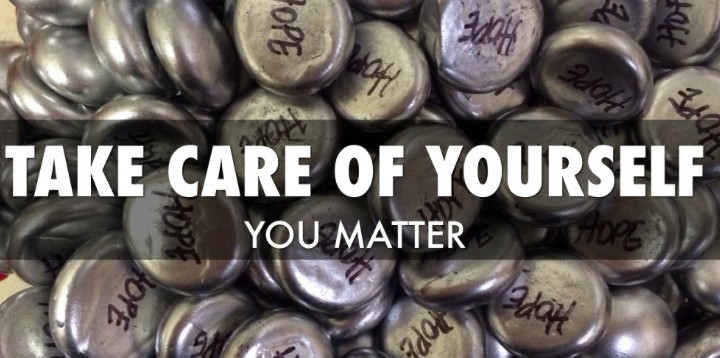
cropped-img_0751.jpgY: YOU MATTER . Remember who matters!

Z: A-Z another list.

I am sure you can add many more. How do you cope? 

What Do You Think School Is For?

img_2792

As I reflect on Seth Godin’s blog today I am thinking about all the educators and what they are doing each and every day as they start a new school year.

Seth reminds us

  1. that digital learning is a revolution that can transform people faster and with more impact
  2. to play as if it matters
  3. that dreams are difficult to build and easy to destroy

Check the rest of his talk out  here.

What do you think school is for and how will you make it better for students?

Ken Robinson always makes us think and I hope he does you too. Both Seth and Ken challenge us to move away from compliance and conforming to celebrating students learning. No learning … no education going on says Ken Robinson. So how do educators best go about helping students learn?

Ken reminds us

  1. that human beings are naturally different and diverse
  2. to light the spark of curiosity
  3. to awaken and empower a culture of creativity
  4. to individualize teaching and learning

Listen to the rest of his talk here:

What do you think school is for?

Digital Citizenship: School Counsellors Can Take The Lead

Cq4QzbFUkAEiZCS.jpg-large

“Nothing leaves a deeper impact on students than actually allowing students to see proper social media usage modeled daily by respected adults (parents, teachers, administrators) and by allowing students to use social media properly in the actual space” says Nikki D Robertson in her article Don’t Ban Social Media.

Digital Citizenship becomes even more important daily as students and adults figure out what matters online. As School Counsellors you can take the lead in this area. If you know how to navigate and model proper social media usage , then you will be able to assist the students you serve to do so too.

I know for me learning all the ins and outs was not easy ( and still isn’t ) , but the lessons were so important for me to learn as a seasoned School Counsellor. I am here to say we are never too old to learn and we should indeed continue to discover and educate ourselves. Every day I continue to master new ideas and believe we must start early to teach all students and all staff about digital citizenship.

Daily online, I see school administrators, counsellors , teachers and students who do not understand the basic concept of  EVERYTHING ONLINE IS PUBLIC. Even if you believe it is private … it is not. Many fall into the trap of the Illusion of Privacy.

If you’d like more articles on digital citizenship you can check out my online School Counsellor Talk weekly here.

I hope to see many more School Counsellors take the lead when it comes to this most important area in a comprehensive school counselling program plan. Won’t you join me on this learning journey?