Copious Ways of Coping

Dealing with our distress is important to maintaining mental well-being and can be challenging. However, having a set of effective coping strategies can make a significant difference. We all need them young and old. You can build and use your own Coping Toolkit to navigate daily stressors and improve your overall mental health and wellbeing. Here are a few that I put together from A- Z to get you started. What works for you may not work for someone else.

The Feelings Thermometer

A feelings thermometer can help young people identify how they are feeling and will assist others in helping youth manage their emotions effectively. The thermometer is a simple tool that helps you gauge your current emotional state. Are you feeling calm and collected, or are you on the verge of a meltdown? Identifying this can help you choose the right coping strategies. If a young person is on the verge of a meltdown the way you help them will be much different than if they are at a 4-5 on a scale of 10.

Building Your Coping Toolkit

Your Coping Toolkit should include personalized strategies that work best for you. Here is an online Coping Toolkit that I created in Google Slides that you can use with youth.

Daily Reminders

Consistency is key when it comes to coping strategies. Here are some daily reminders to keep you on track:

  • Reframe Your Thoughts: Practice turning negative thoughts into positive ones. This can help shift your perspective and reduce feelings of distress.
  • Practice Gratitude: Take a moment each day to reflect on what you’re grateful for. This simple habit can improve your mood and outlook on life.

Healthy Coping Mechanisms

Identifying healthy ways to cope with distress is crucial for long-term well-being. Here are some methods to consider:

  • Journaling: Writing down your thoughts and feelings can be a therapeutic way to process emotions.
  • Healthy Distractions: Engage in activities you enjoy, such as reading a book , playing sports , creating art or watching a favorite show, to take your mind off stressors.
  • Relaxation Techniques: Techniques such as progressive muscle relaxation and guided imagery can help lower stress levels.

Reducing Carried Distress

Carrying around unresolved distress can be burdensome. Here are a few strategies that may lighten your emotional load:

  • Set Realistic Goals: Break down tasks into smaller, manageable steps to avoid feeling overwhelmed.
  • Self-Compassion: Be kind to yourself and acknowledge that it’s okay to have off days.
  • Seek Professional Help: Talking to a therapist or school counsellor can provide you with the help you may need. It’s a strength to reach out.

I love this podcast by Andrew Huberman as he interviews Dr. Victor Carrion on PTSD in youth. They are strategies we can all use with youth.

If you aren’t listening or paying attention to all the amazing interviews by @hubermanlab you may want to start today. Below are some of my adaptations of what Dr.Carrion had to say in his interview with Andrew Huberman. I love how Huberman shares all the fabulous resources on his web page. It’s a must go to space for all counsellors.

By incorporating coping strategies into your daily life, you can create a robust Coping Toolkit that helps you manage stress and enhance your mental well-being. Remember, it’s about finding what works best for you and practicing these techniques consistently. For more coping skills you can check out our book Counsellor Talk: Connecting Through Creative Counselling Techniques. There are copious resources inside.

Feel free to share your own coping strategies in the comments below. Let’s support each other in building healthier, happier lives!

Navigating Anxiety | Counsellor Talk

Does your mind sometimes feel like a tangled ball of yarn, with worries and fears pulling you in every direction? You’re not alone. Anxiety is a common emotion we all experience, but when it overstays its welcome, it can disrupt our daily lives.

Understanding Anxiety

Imagine anxiety as a fire alarm in your brain. It’s there to alert you of danger, but sometimes it goes off even when there’s no real threat—like when you burn toast. When anxiety becomes frequent, intense, and prolonged, it can interfere with your daily routine and overall well-being. Recognizing this is the first step towards managing it.

Anxiety is a common emotion, but when it becomes persistent, it can interfere with daily life. Frequency, intensity, and duration matter. If you’d like to understand more go to AnxietyCanada.com

Avoidance Behavior: The Sneaky Culprit

Avoidance might seem like a quick fix, but it’s a sneaky culprit that can make anxiety worse. Ask yourself: Are you dodging certain situations because of irrational fears? If the answer is yes, it’s a sign you need to address the root of your anxiety. Talking to a doctor or a counsellor can be incredibly helpful.

Stay Connected

Humans are social creatures, and sharing our feelings can be a powerful antidote to anxiety. I walk and talk almost daily with colleagues and friends and it is amazingly helpful to deal with a range of emotions. Whether it’s chatting with friends, joining a support group, or even writing in a journal, expressing your thoughts can reduce the feelings of isolation that often accompany anxiety.

Everyone Experiences It Differently

Just because you’re feeling anxious doesn’t mean you have an anxiety disorder. It’s essential to understand that everyone experiences anxiety differently. Educate yourself about anxiety and mental health to better navigate your emotions. Check out mentalhealthliteracy.org for more fabulous resources.

Professional Treatment: Your Toolbox

When anxiety becomes too much to handle on your own, it’s time to explore professional treatment options. Cognitive Behavioral Therapy (CBT) and medication are two effective methods for treating chronic anxiety. Finding the right approach might take some time, but it’s worth the effort to explore different options and regain control over your life.

Anxiety doesn’t have to rule your life. By understanding it, addressing avoidance behaviors, staying connected with others, and seeking professional help when necessary, you can manage anxiety and lead a fulfilling life. Remember, you are not alone on this journey.

For more resources check this out and for tips on well-being, visit counsellortalk on Facebook and join the conversation on Instagram @counsellortalkcanada.

Enjoy every second of every day and take care of yourself!

Note: This blog post is for informational purposes only and does not substitute professional medical advice.

Pillars of Mental Strength

In life, we often encounter ups and downs that can challenge our mental fortitude. It is during these times that our mental strength comes into play. The ability to navigate through life’s challenges, bounce back from setbacks, and stay focused on our goals isn’t always easy.

It’s not about ignoring feelings or suppressing emotions, but about developing a helpful set of skills and attitudes that can help us manage our thoughts, regulate our emotions, and behave productively even in the face of adversity.

Four key pillars of mental strength that could be helpful to you are self-awareness, optimism, adaptability, and resilience.

Self-awareness involves understanding your strengths, weaknesses, and triggers. It means being aware of your thoughts, feelings, and behaviours, and how they might be affecting your life. We could all use a little self-awareness and reflection. Journaling is one way to become more self-aware and our book, Counsellor Talk offers you an opportunity to dig deep and explore your thoughts and feelings. Self-awareness is the first step in building mental strength because, without this awareness, it’s difficult to identify areas of improvement. When we understand our strengths, we can leverage them to our advantage. Staying focused on our strengths is so important. When we understand our weaknesses, we can work on improving them. When we understand our triggers, we can develop strategies to manage them.

Optimism, the second pillar involves maintaining a hopeful outlook even in challenging situations. Optimism doesn’t mean ignoring the reality of your situation, but rather choosing to focus on the most hopeful aspects. It’s about expecting the best possible outcome and viewing the glass as half full rather than half empty. I believe there are some genetic aspects to optimism, however it is a skill that can be learned. Research shows that optimistic individuals are more likely to persevere in the face of adversity, have better health outcomes, and live longer lives. By developing a positive mindset, we can enhance our overall well-being.

Adaptability, the third pillar of mental strength means being able to embrace change and adjust strategies when needed. Life is definitely unpredictable and the ability to adapt to new situations or changes is crucial in building mental strength. Adaptable individuals can adjust their thinking and behaviour to meet the demands of different situations. They are open to new ideas, willing to take risks, and able to learn from their experiences. By being adaptable, we can navigate through life’s challenges with more ease and confidence. It is a skill we can learn to make life more manageable.

Resilience, the last pillar is where we learn from setbacks and view them as growth opportunities. Resilience is the ability to bounce back from adversity, trauma, or failure. It’s about being able to pick yourself up, dust yourself off, and keep going.

As parents and counsellors we not only need to model resiliency skills we also need to let our young people experience failure and learn from it. Resilient individuals are not immune to difficulties, but they can healthily cope with them. They view setbacks as temporary hurdles rather than permanent roadblocks. By fostering resilience, we can enhance our mental strength and improve our capacity to recover from life’s challenges.

Mental strength is not something we’re born with, but something we can cultivate over time. By building self-awareness, maintaining an optimistic outlook, embracing adaptability, and fostering resilience, we can navigate life’s challenges with more confidence. Remember, it’s not about being strong all the time, but about knowing how to tap into your strengths when you need the most.

For more information on mental strength and other related topics, you can also follow us on Facebook by searching for ‘counsellor talk’, and on Instagram at @counsellortalkcanada. What pillar of mental strength would you add?

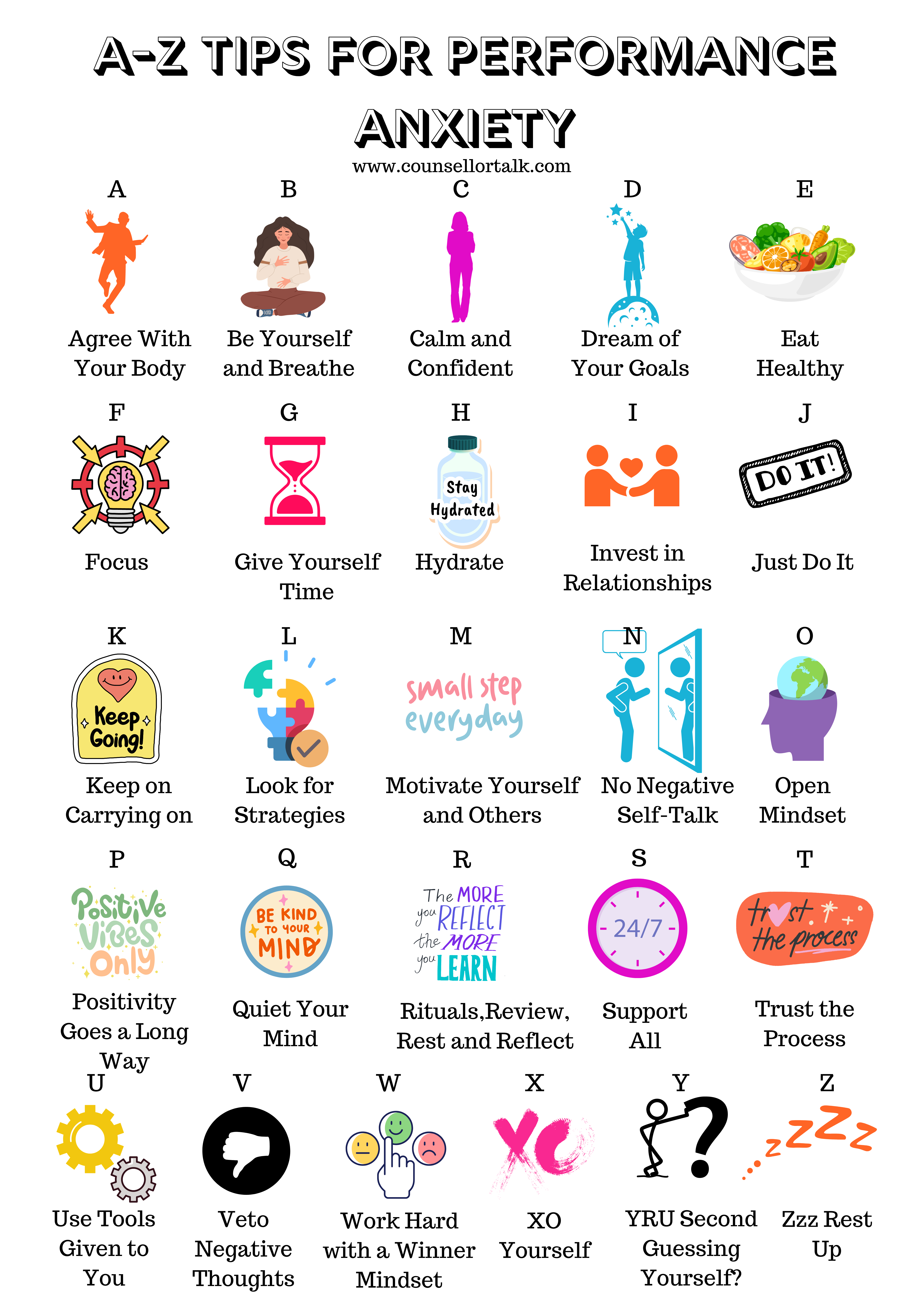
Performance Anxiety

We feel so lucky to work with talented youth, like the Young Canadians of the Calgary Stampede. Their dedication and creativity are awe-inspiring, and we’re grateful for the opportunity to share their tips and experiences with you!

Performance anxiety is a personal experience that can range from minor jitters to overwhelming nerves. Here are some ideas we believe can help:

  1. Confront Negativity: Recognize and address any negative thoughts or perceptions about performing. Accept the need for change and work on these one at a time.
  2. Cultivate Confidence: Believe in your unique gift and your purpose in performing. Slow, deep breathing, like square breathing, can help keep you centered.
  3. Challenge Negative Thoughts: Shift your inner dialogue from “I can’t” to “I can.”
  4. Stay Engaged: Focus on the music or your performance rather than potential mistakes.
  5. Embrace Excitement: A mindset of excitement can actually enhance your performance. Let those butterflies work for you!
  6. Progress Takes Time: Remember the 10,000-hour rule. It takes time to master your craft, so be patient and kind to yourself.
  7. Rest Well: Prioritize rest before and during performances. It makes a significant difference.
  8. Stay Positive: Keep a hopeful mindset.
  9. Visualize Success: See yourself as a star performing flawlessly.
  10. Be Authentic: Journal your fears and stay true to yourself.
  11. Stick to Routines: Consistency can offer comfort and help ease anxiety.
  12. Normalize Anxiety: You’re not alone. Chat with a friend to share strategies and support.
  13. Embrace Imperfection: Perfection isn’t the goal—focus on your growth and journey.
  14. Practice in Front of Trusted People: This can help you build confidence and comfort.
  15. Quiet Your Mind: Find techniques to help you stay present in the moment.
  16. Shift Your Focus: Concentrate on the impact you can make for your audience instead of focusing on your nerves.
  17. Ditch “Shoulds”: Replace pressure with calming and reassuring thoughts.
  18. Reframe Your Mindset: Swap self-doubt with confidence-boosting affirmations.
  19. Mindset Matters: Remember, performance anxiety can be a self-fulfilling prophecy. Challenge the “what ifs” and focus on the positives.
  20. Let Go of the Spotlight Effect: Realize that people may not be watching you as closely as you think.
  21. Change Your “What-Ifs”: Transform negative “what-ifs” into empowering “what-ifs.”

The Young Canadians offered a treasure trove of advice, such as:

  • Always be Positive, Affirmations Help, Anxiety is Really Excitement, Ask For Help, Address what’s making you stressed, Agree with your body, Assertive mindset, Act Kind.
  • Be Prepared, Breathe, Be Brave, Be The Best Version Of Yourself.
  • Calm Your Nerves, Confidence, Concentrate, Care for Yourself.
  • Don’t be Negative, Deep Breaths, Determination, Demolish Those Negative Thoughts.
  • Express Your Emotions, Eat Healthy, Engage Your Mind.
  • Fight Your Demons, Faith, Find A Distraction, Friends are There For You, Fear is OK, Finish What You Started.
  • Give It Your All, Get a Friend, Go For It! Growth Mindset.
  • Have a Calming Ritual, Have Fun! Hug a Friend, Hydrate.
  • Ignite Your Passion, Include Each Other, I Can Control Myself, Invest in Relationships, Imagine Success, Immerse Yourself, Inspire Others.
  • Just Be “John”, Just Do Your Best.
  • Kindness To Others, Keep Dancing, Singing, Playing, Keep Relaxing, Keep Focused.
  • Live, Love, Laugh, Love yourself, Lead The Way, Leave Anxiety Behind, Left Brain Shut-off.
  • Make Sure You Have Your Shoes, Meditate.
  • Never Back Down, No Fear: “The Young Canadians Are Here!” No over-thinking!
  • Optimistic Outlook, Open Mind.
  • Push Your Limits and Patience, Picture Everyone As People You Love, Prepare To Perform, Positive Mind and Thoughts.
  • Quit Quitting, Quiet Space, Quiz Yourself on Choreo
  • Respect Yourself and Others, Relax.
  • Sing, Dance, Play Your Heart Out, Snack so you won’t be Hangry! Shake it Off!, Sleep Well.
  • Trust Yourself, Trust The Process, Take A Walk, Talk To Someone You Trust, Take a Hot Minute.
  • U-have to Calm Down, U are Special, Use Tips and Tricks, U can do it! Uplift Each Other.
  • Victory is Yours, Voice Your Emotions, Veto Bad Thoughts.
  • We Love You, Work, Walk It Out, Warm Up.
  •  X-hale, X out Your Stress, X out Negative Thoughts.
  • You Got This, You Are Good Enough, YOLO Mindset.
  • Zero Fear, Get Your ZZZs (sleep), Zen Time, Zero Regrets.

Remember, when it comes to performance anxiety, you’ve got the tools! Believe in yourself and your abilities. Reach out if it becomes too tough. The next time you perform, use the tips that work for you to transform your own anxiety into excitement changing performance anxiety into a friend rather than a foe!

Helen MacKinnon and Susan Spellman Cann

The Little Things Are The Big Things For Me

Two years ago I started on a journey , I made a goal of walking every day for at least one half hour. I knew if I focused on the little things I could achieve, I would reach my goal. I knew if I walked 15 mins. in the morning and 15 minutes at night that was a goal I could achieve. I walked every single day, sometimes for more than a half hour and am very proud to say that I achieved my goal despite many obstacles.

On July 1st of last year I set a new goal. My dad had passed away on June 30th, his 4th heart attack and my mom was left on her own with health and mobility concerns, so I knew I needed to be as strong and as healthy as possible so that I could enter my senior years focused on being well physically, emotionally and spiritually.

I want to leave my children a legacy that their mom did everything she could to take care of herself. I set a new goal to record what I ate every day and to eat as healthy as possible. Again I am so happy to say that I achieved my goal. This year I walked longer and more but I missed days because of unavoidable circumstances. I am happy to say it has become a part of what I do and who I have become.

For July 1st 2020 – July 1st 2021, I plan on writing in my blog daily, even if it is only a very short post. It’s an opportunity to share some of my thoughts so I can reflect in the hopes that someday my children may read if they choose to.

My July – July goals work for me. Going into the summer is a great time to focus on what I want to do in the upcoming year. I take each day as it comes and am happy to focus on the little things. For me the little things are the big things. With Covid 19 coming into all of our lives this year, focusing on my well being was more important than ever. Later today I will go on a second physically distanced walk with another friend of mine. Walking and talking , noticing the little things brings such joy. On my earlier walk I saw the beautiful rainbow above. If I never walked outside I would not get to enjoy this little thing, which is a big thing for me.

Walk Along With Me

I am always looking for ways to improve myself, but this year I am on a mission as I fully recognize that I am aging and so are those around me. I lost my dad in June to his fourth heart attack. I recognize that he had extra time to live life after each heart attack that most people don’t get. However, his quality of life had diminished greatly. His final passing seemed to be a wake up call for me.

Life is fragile and I want to live my best life being fully mobile into my 70’s 80’s 90’s and ….

So NOW is the time to take care of myself. Yes, I know I should always put myself as my top priority on the healthy living list, but haven’t always done so. I have been very fortunate to have had a positive mindset waking up each day to look at the bright side of life ( I believe I was partly born this way ). The rest was who I chose to surround myself with and the hard work on my part to take care of my mental well being.

I have always been active physically. I have loved sports my whole life and continue to find ways to exercise. This past year July 1 st 2018- July 1 st 2019 , I walked every single day and I am very proud of this accomplishment. I walked even when it wasn’t the best time to walk. Through sickness and sorrow I found the strength to walk.

Starting July 1 st 2019 , I decided that I would set new goals to be the best me I can physically, mentally , and spiritually. So each day I am putting the focus on how I can reach my goals. I am keeping a journal every day so that I can track my progress. I plan on getting a personal trainer this fall making a commitment to myself to be free of any negativity that hinders my goals.

Thanks to those of you who walked along with me last year. It truly made a difference to me knowing that you were watching the videos that I posted on twitter. You are part of the reason I was able to accomplish my goal, it made me accountable for sure. This year although I won’t be posting near as often , I am still posting knowing that you will support me as I work at living my best life.

I thought turning 60 would be hard and it was in some ways , but really I have so much to be grateful for. As I get closer to 61 I intend to make each day even better. I need to live my life to the full potential I deserve, being as healthy as I possibly can . So look out 61 here I come …

Walk Along With Me

IMG_5956

I have a couple of important goals this year and I plan on making my learning visible. This is not the typical Counsellor Talk post I write , but it is an important one … taking care of me and I’m inviting you along on this journey. Today is Canada Day and what better day to start walking my way to a healthier me while sharing and learning along the way.

IMG_0026I am making a commitment to myself to walk every day for 30 minutes for the next 365 days. Walking has always allowed me to think more clearly and I know I always feel better when I do. It may sound easy to many of you , but I don’t always commit to exercising every single day. without a break.   If I break it down into chunks 15 minutes in the morning and 15 minutes at some other time in the day I know I can meet my goal. It isn’t easy to do this alone ( I miss my walking partners)  so that is why I am inviting you on my journey.

If you wish to send an encouraging word or a video or a message to me along the way feel free to do so. I turn 60 this September so I know I need to take better care of myself.  Taking care of our physical health is always important , but even more so as we age.  I have always been very good at taking care of my brain , but at times have not taken as much care of my body as I know I need to. This is my open way of sharing my commitment to myself. No excuses! It’s too cold , I’m too busy … on and on ! 365 days starting today … I can do it!

Won’t you walk along with me #walkalongwithme  and tell me what you have learned along the way?