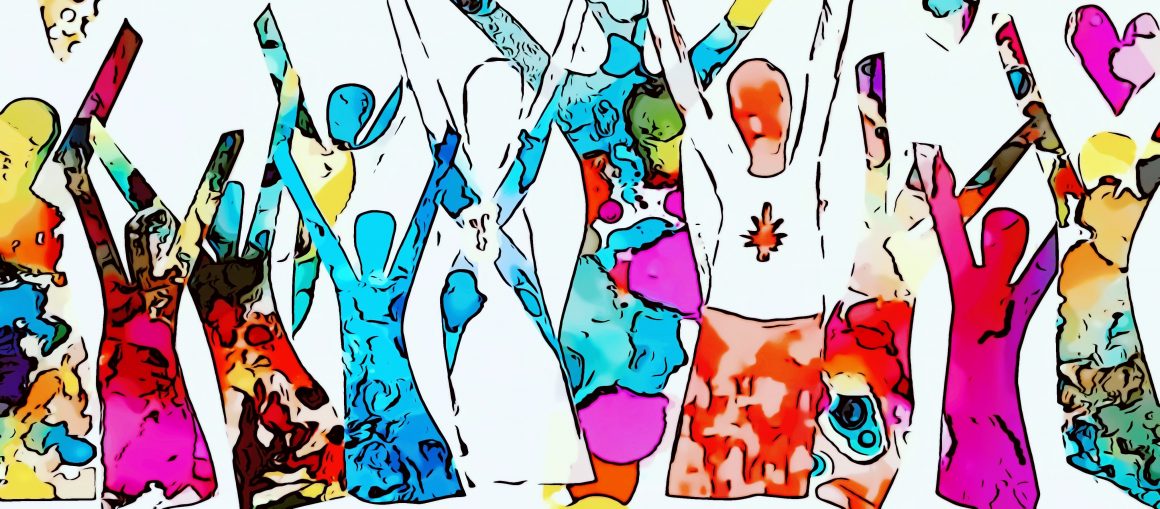
Art is a form of self-expression that goes beyond words. It allows us to be who we are, without judgment. It’s ok to be childlike and create from your heart that is what I do. To guide you through this journey, I created a series of affirmations. These affirmations are words of encouragement and inspiration that will help you tap into your inner artist and create freely.
Affirmations to inspire your creative side
“I will be ok with mistakes, they make marvelous art pieces.”
“I will use the whole box of crayons and enjoy the moments.”
“Today, I will create with love and passion.”
“I will create art with no rules.”
“I will be childlike and create.”
“I can visualize what I would like to create.”
“I will allow art to take me away and go with the flow.”
“Today, I will forget about my worries and just be.”
“I can and will play.”
“I will never underestimate myself, I am worthy and will not compare myself to other artists, I am me.”
“I will create and let it take me away today.”
“I will recognize my inner artist and act as if.”
“I will let art heal me.”
“I will trust myself and the process and see the artist in me.”
“I will lift up other creatives.”
“I’ve got this, I will let go and have fun.”
“I am created to create.”
“I recognize that every artist was once an amateur.”
“I will create, not critique.”
“I will not give up, I am an artist.”
These powerful affirmations are designed to inspire and motivate you, to embrace your creativity, and to believe in your ability to create. Remember, there are no rules when it comes to art, and mistakes can lead to beautiful pieces. So, use the whole box of crayons and let your imagination run wild.
About the Artist
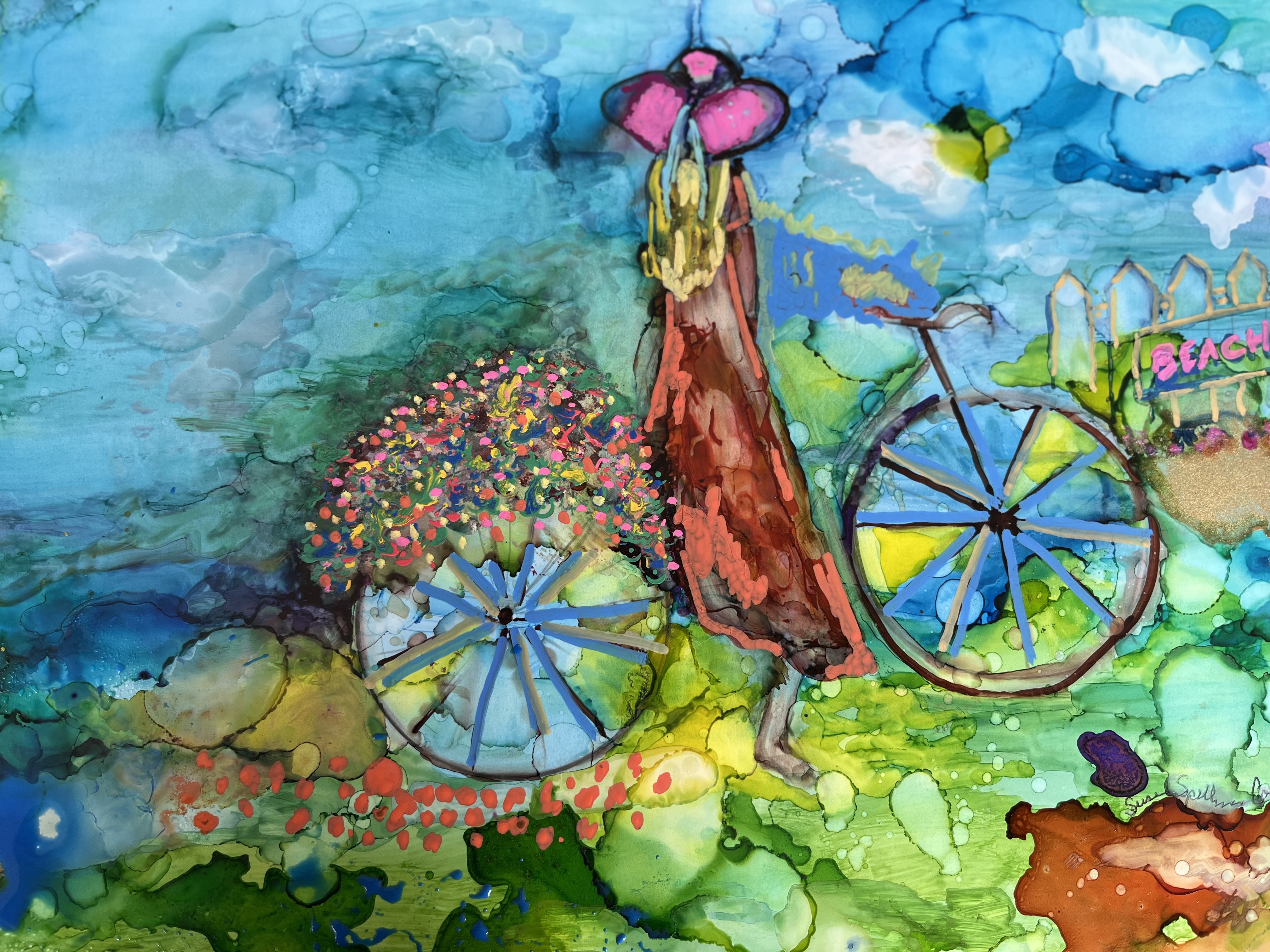
All art and affirmations in this post are by Susan Spellman Cann (@sspellmancann). Susan is an artist and psychologist who believes in the power of art to heal, inspire, and bring joy. An advocate for self-expression and creativity, Susan encourages others to embrace their inner artist and create freely. Remember, every artist was once an amateur, so don’t give up and keep creating.
Canva, with its incredible AI features, can help you create engaging resources, infographics, and much more. Let’s explore how to use these tools in your role as a school counsellor.
Section 1: Creating Engaging Visual Content
Personalized Posters: Start with the basics – design personalized posters for your school events, workshops, and counselling sessions. Canva’s AI suggests colors, fonts, and layouts that resonate with your message.
Emotional Intelligence Infographics: Use Canva’s AI to visualize emotional intelligence concepts. It can help simplify complex topics and make them more relatable to students.
Section 2: AI-Powered Design Assistance
Layout Recommendations: Canva’s AI suggests optimal layouts for your content. It considers the psychology of design to make your materials more visually appealing and effective.
Color Harmony: Let the AI assist in choosing color palettes that convey the right emotions. For example, soothing colors for relaxation exercises or vibrant ones for motivational posters.
Section 3: Interactive Quizzes and Surveys
Interactive Content: Create quizzes or surveys for students to self-assess their well-being or mental health. Canva’s AI can even help generate questions and answer options.
Section 4: Personalized Guidance
Custom Templates: Design your own templates for school counselling materials. Canva’s AI remembers your preferences and suggests relevant templates for future use.
Section 5: Data Visualization
Visualizing Progress: Utilize AI-powered charts and graphs to track and showcase students’ progress. This can help in sharing results with teachers and parents effectively.
Section 6: Mindful Content Creation
AI-Enhanced Quotes: Canva’s AI can suggest quotes that resonate with students’ emotions. Incorporate these into your materials for an extra dose of inspiration.
Relaxation Exercise Videos: Use Canva’s AI to edit and enhance relaxation exercise videos. It can help you create a soothing and calming atmosphere.
Section 7: Collaborative Projects
Group Projects: Collaborate with students on creative projects. Canva’s AI can facilitate brainstorming and design suggestions for group initiatives.
Canva’s AI capabilities open up a world of creative possibilities for school counsellors like you. It can help you connect with students in innovative ways, making counselling sessions and resources not just informative, but engaging and fun. Embrace the magic of AI and inspire your students to thrive!
Here are 20 ways school counsellors can use Canva ‘s AI tools
AI-Curated Reading Lists: Canva’s AI can help school counsellors curate personalized reading lists for students based on their interests and needs. This can be a valuable resource to support students’ personal development and provide them with relevant content to enhance their understanding of various topics.
AI-Enhanced Videos: Create educational and motivational videos for school counselling sessions. Canva’s AI can be used to edit and enhance video content, adding subtitles, visual effects, and animations to make the material engaging and informative.
AI-Generated Affirmations: Generate daily affirmations with Canva’s AI. These affirmations can be used in daily routines or as part of counseling sessions to boost students’ self-esteem and promote positive thinking.
AI-Generated Playlists: Craft music playlists with AI-generated recommendations to set the mood during counseling sessions. Music can be a powerful tool to create a calming or motivating atmosphere.
AI-Powered Career Path Infographics: Use Canva’s AI to create infographics that visualize potential career paths for students. These infographics can include information on job prospects, required qualifications, and career development steps.
AI-Prompted Journaling: Canva’s AI can generate journaling prompts tailored to each student’s needs and preferences. Journaling can be a therapeutic tool for self-reflection and personal growth.
Audio Visualization: Design graphics that visually represent audio recordings of relaxation exercises, therapy sessions, or guided meditations. These visuals can enhance engagement and understanding during such activities.
Collaborative Art Projects: Collaborate with students on creative art projects using Canva’s AI for design input. These projects can serve as a therapeutic outlet for self-expression and creativity.
Digital Mind Maps: Create interactive mind maps to help students organize their thoughts, plan projects, or visualize complex concepts. Canva’s AI can assist in generating mind map structures.
Emotion Wheel: Craft an interactive emotion wheel that students can use to identify and express their feelings. This can be a useful tool for emotional self-awareness and communication.
Gamified Counseling Materials: Use Canva’s AI to create interactive and gamified counseling materials. Gamification can make counseling sessions more engaging, helping students to learn and apply coping strategies in a fun way.
Interactive Decision Trees: Build decision-making flowcharts with AI recommendations to guide students through complex choices. This can be especially helpful when students are facing significant decisions.
Interactive Progress Trackers: Develop visually appealing trackers for students to monitor their progress in various aspects of life, such as academic achievements, personal goals, or mental health improvements.
Mindful Coloring Pages: Design AI-generated mindful coloring pages for students to use as a relaxation and stress-reduction tool. Coloring can promote mindfulness and stress relief.
Motivational GIFs: Craft animated GIFs with Canva’s AI to provide quick motivational boosts during online counseling sessions. GIFs can be used to emphasize key points or convey supportive messages.
Positive Message Banners: Create interactive banners that display positive messages. These banners can change based on student interaction, providing customized motivation and encouragement.
Self-Care Bingo: Develop personalized self-care bingo cards with AI-generated self-care ideas. This can encourage students to engage in self-care activities and promote their well-being.
Therapeutic Comic Strips: Create therapeutic comic strips with AI-generated dialogues and scenarios to address common issues and challenges that students might face.
Virtual Vision Boards: Canva’s AI can help students create digital vision boards, visualizing their goals, dreams, and aspirations. These vision boards can serve as powerful tools for motivation and goal setting.
AI-Powered Study Guides: Assist students with AI-powered study guides that adapt to their learning preferences and needs. These guides can include interactive elements, quizzes, and personalized study tips.
Each of these ideas empowers school counsellors to use Canva’s AI tools in unique ways to support students in their personal and academic growth. The possibilities are truly endless! Please feel free to share some of your ideas in the comments..
So,school counsellors, get out there and create, inspire, and make a positive impact on your school community. Continue to make a difference using Canva as a starting point. Thanks to Chat GPT and Canva for so many ideas. You can use Canva in your School Counselling Program . The possibilities are endless.
Testing out the new AI Magic switch on Canva which turns something I put together into a blog post …
In today’s fast-paced world, taking care of oneself has become a critical, but often overlooked aspect of a healthy and balanced lifestyle. Here, we present a daily guide that will aid you in carving out time for self-care.
Monday: Embrace Physical Activity
Start your week with a good dose of physical activity. Set a goal to exercise for at least 30 minutes. It doesn’t have to be an intense workout; a brisk walk, yoga, or dancing to your favorite tunes can do the trick. The idea is to get your body moving and your heart pumping.
Tuesday: Pursue Happiness
On Tuesday, make it a point to do something that brings you joy. It could be anything from painting, reading a book, or cooking your favorite dish. Engaging in activities that make you happy is an excellent way to reduce stress and improve your mood.
Wednesday: Take a Break
Midweek can sometimes be overwhelming. So, take a break from your routine. Step out of your office or classroom, even if it’s only for a few minutes. This break will refresh your mind and help you regain your focus.
Thursday: Practice Mindfulness
Mindfulness is the practice of focusing on the present moment without judgment. It’s about accepting things as they are. On Thursday, dedicate some time to practice mindfulness and positive self-talk. It will help alleviate stress and increase your mental wellbeing.
Friday: One Day at a Time
As the week ends, remember to take one day at a time. Spend time with people who uplift and inspire you. Having positive influences around you can significantly enhance your mood and overall outlook.
Saturday: Embrace Imperfection
On Saturday, remind yourself that it’s OK to make mistakes. Be gentle with yourself. Mistakes are inevitable, and they are a crucial part of growth and learning. Instead of dwelling on them, use them as stepping stones to improve and move forward.
Sunday: Rest and Recharge
Finally, round off your week with a day of rest. Take care of yourself by doing activities that rejuvenate you. It could be a hot bath, a long nap, or simply spending the day in your pajamas watching your favorite movies. Remember, rest is as important as work, so make sure you prioritize it.
Reminders and Reflections:
As you go through this journey of self-care, here are a few things to keep in mind:
Every day, make a list of three things you are grateful for to cultivate a positive outlook.
Remind yourself that you can handle whatever comes your way.
Each day, set an intention or goal. It could be as simple as ‘Just for today I will…’
By incorporating these simple practices into your routine, you’ll foster a sense of wellbeing and enhance your quality of life. Remember, self-care is not a luxury, but a necessity!
Follow me on Twitter for more self-care tips and advice
Suicide in youth is one of then most serious concerns a School Counsellor will ever have to encounter. Knowing the facts are important and Dr.Tyler Black does a great job of keeping us informed.
Suicidology Canadian Suicide Statistics =-=-=-=-=-
Since the pandemic started, youth suicides have decreased by 21% overall compared to pre-pandemic trends. This translates to ~116 fewer child suicides than were anticipated. Holds for both boys and girls in Canada.
During the pandemic, we have seen children thrive and children suffer. It is important to pay attention to the research. Keeping the best interests of youth in mind is keeping up with the research. Our youth are “not as good as we want and not as bad as we have heard.” It is so important not to pathologize normal reactions to any adverse event. How we respond to events matters now and will in the future.
How youth are impacted will continue to be an important issue counsellors must pay attention to. The individuals who you see in front of you and what you can do to help is what really matters. Knowing what the research says is very important.
If you’re a foodie, Cape Breton has some amazing surprises in store for you. Book a table at any of the following restaurants and be prepared for a gastronomic adventure. Just bring your appetite!
Grá, is a small, but absolutely wonderful farm to table restaurant in the small community of Ross Ferry. Susan and I (Helen) have had meals there that were amazing. The Chef, Cherie Swift, has a knack for flavours and her presentation is second to none! Reservations are a good idea!
Woodroad is another spectacular, small restaurant in Margaree that showcases local cuisine. It’s built on the waterfront and has spectacular views. Cocktails at 6:30 with dinner beginning at 7:00 pm.
These two restaurants all have set fixed menus. Check with each one to find out their policies regarding alcohol.
Taking its cues from Maritime and French influences , the Bothy in Louisbourg will not disappoint. Call 902-733-2080 (the only way you will get a reservation). If you are going with a group the charcuterie board is a great start.
The Bite House is another small farm-to-table place outside Baddeck You used to be able to dine in, but can now get takeout.
Cable Room in the Telegraph House in Baddeck is a restaurant that has great ratings and can also supply wonderful meals for vegan and vegetarian diners.
The restaurant at the Chanterelle Inn, in North River, has vegetarian, non-vegetarian and seafood main courses, along with their signature home-made soups and artisan breads. Wonderful vistas overlooking the North River hills and valley. Book well ahead of your schedule.
Glenora Inn and Distillery’s gourmet restaurant is also a place not to miss! It’s located on the Inverness side of the island. Not only can you have a fabulous meal, but don’t forget the tour and tastings of the famous single-malt distillery.
If you are travelling to Ingonish, be sure to have a meal at the Purple Thistle Dining Room in the Keltic Lodge. Wonderful seafood dishes are included on the menu, which also has a wide range of items to choose from. And you get to dine while looking at the ocean and the Highlands!
If you are in a VRBO don’t hesitate to get a fine meal of crab. We both prefer it over lobster,
These are some of the gastronomic delights to be found on the Island. In addition, there are so many bistros and cafés to be enjoyed in almost every village and town. No matter your food tastes and interests, you will find a place to accommodate you! Watch for an update as we begin to compile a new list of those ‘must try’ places!
Nova Scotia, it tugs at your heartstrings, and for some, it never lets go. For the past 40-some years, we have both been returning to our roots in Nova Scotia. If you want to find tranquillity and also have a good time, we’re betting it will pull on yours as well. It’s not just the place, it’s the people and the way of life that make it a place we long to be as the summer draws near. For one of us, it is still a pull from far away; for the other, it is a new retirement home.
If you are thinking of traveling to Nova Scotia, there are a few places we would recommend. Of course, number one, for us both, would be Cape Breton, often named the #1 island to visit in Canada and North America. It’s a beautiful little Island with so much character, some of the most spectacular scenery in the country, and lots of great, fun things to do. Want to know where to find culinary delights? Check out these recommendations. Do you enjoy a sip or two of wine, well check out some of these wineries.
Here are some of our top places to visit in Cape Breton; some are probably very familiar and some are off the beaten track; some are tourist destinations and some are noted because we’ve lived here, off and on, for quite some time; some will provide simple pleasures, like walking on a beach, and others will provide you with fabulous experiences, like strolling through a historic village. We think each one of them has so much to offer, creating stunning memories of your visit!
And so, in no particular order:
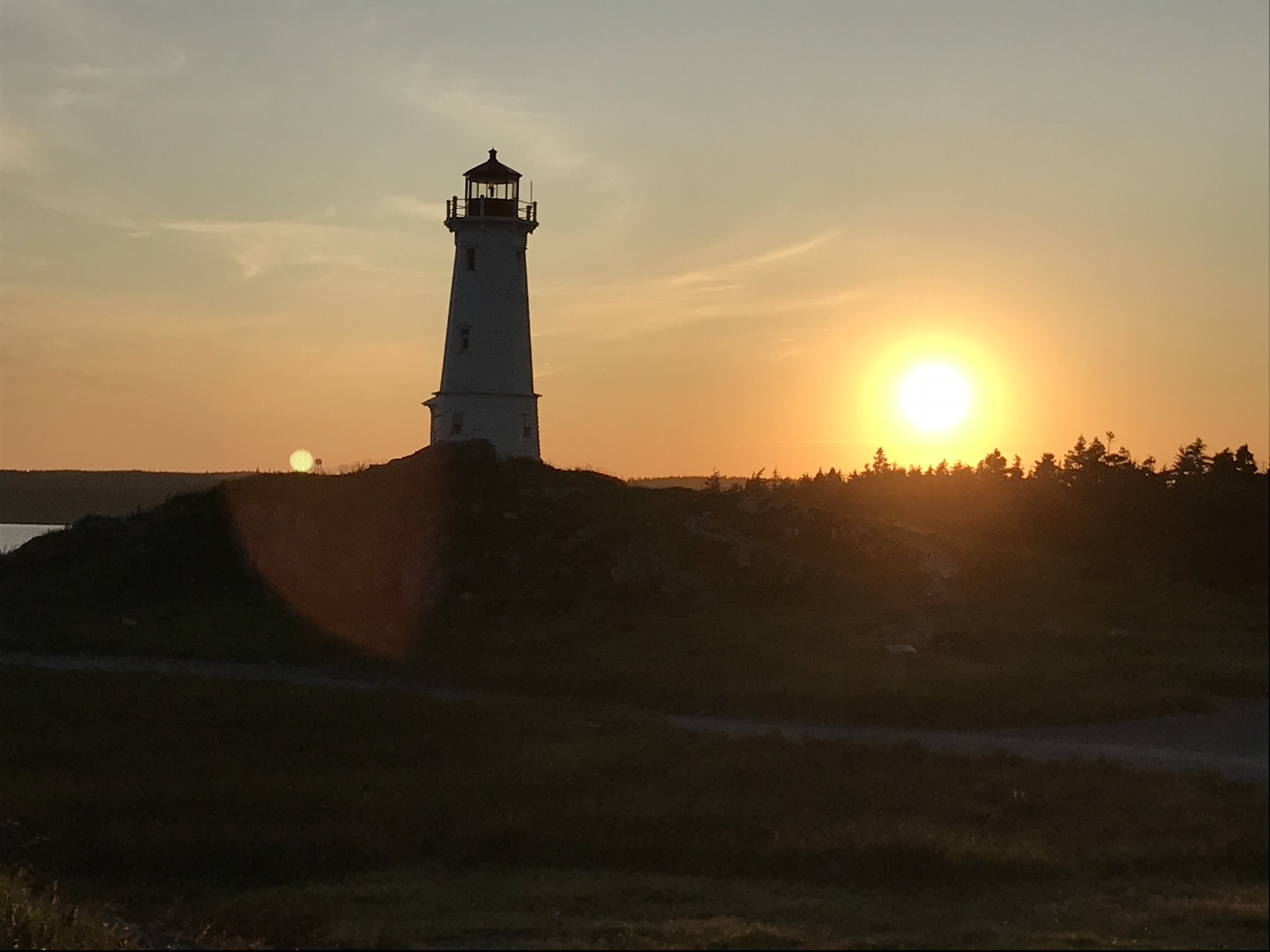
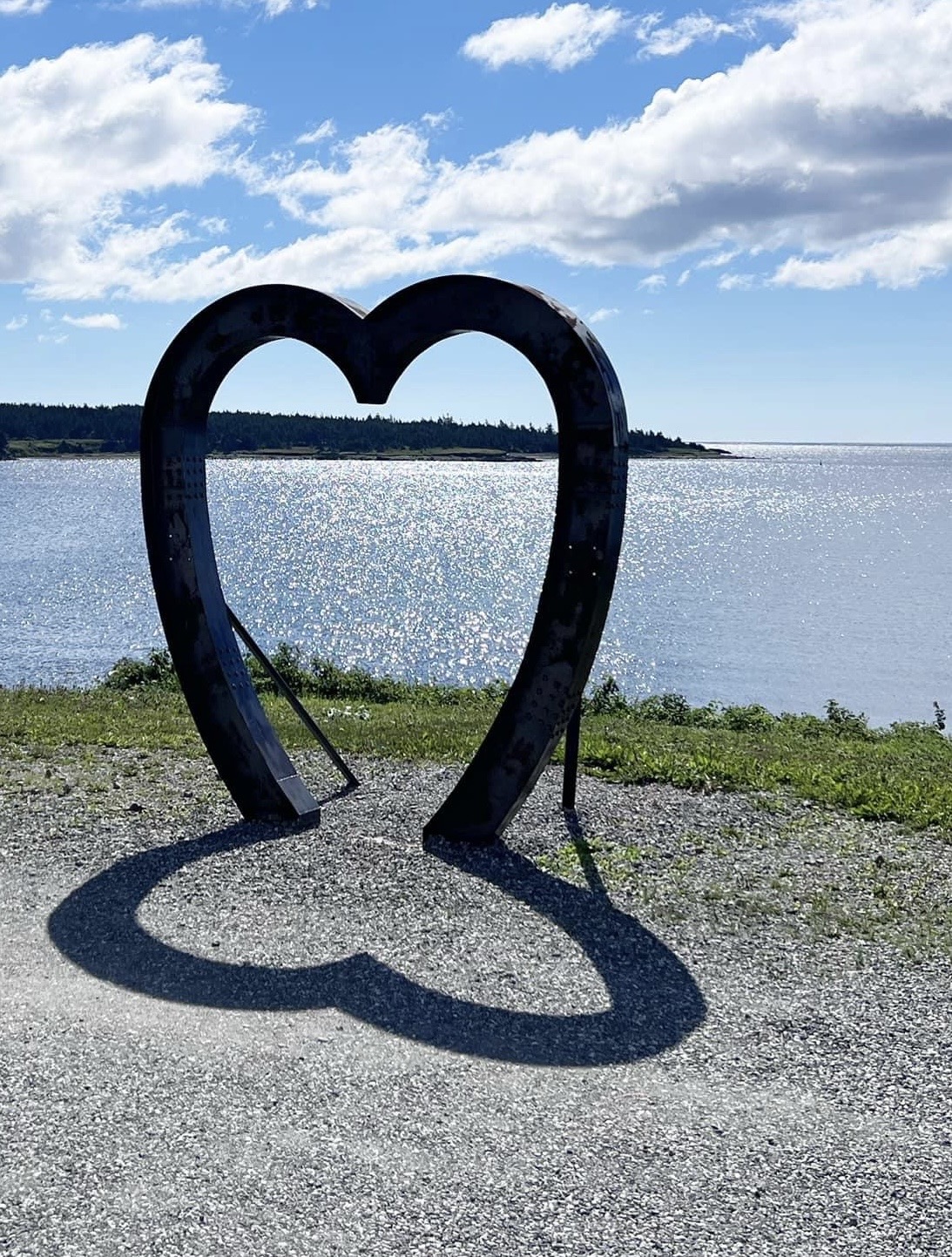
Taken in Louisbourg by @sspellmancann
Louisbourg is a great little town to check out. Head towards the lighthouse in Louisbourg. It’s a gem of a place, we may be biased but we like it better than Peggy’s Cove. You can stroll along the fabulous 2 km Lighthouse Trail, (sadly at the time some of you may visit it will be in repair. It is always one of our favorite things to do. There are so many places all along the Louisbourg Trail with opportunities to take many fabulous photos – you won’t know which ones you like best!
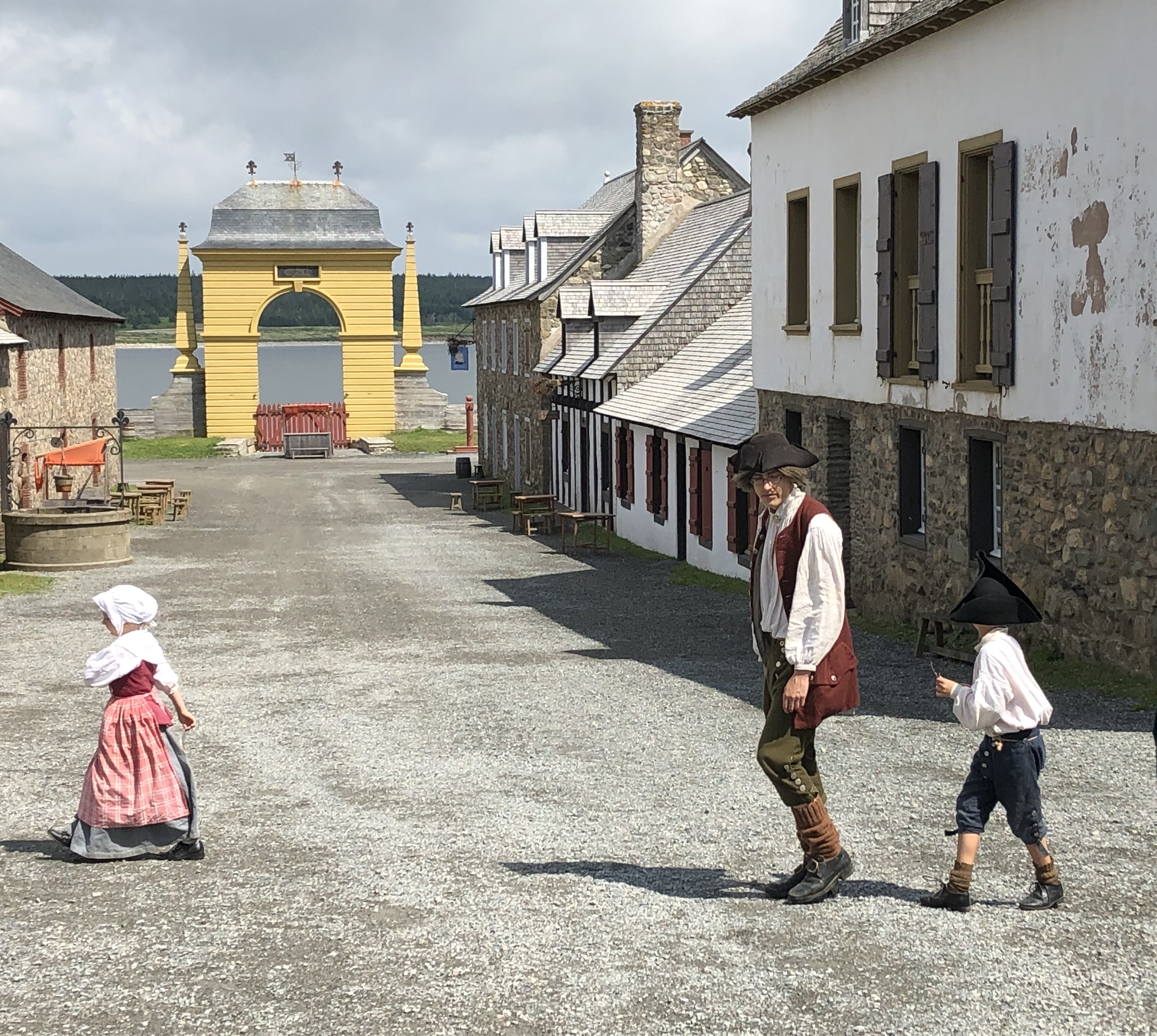
A few places you might like to stay in Louisbourg are the Louisbourg Harbour Inn, a lovely B and B, where you will be treated to a fabulous place to stay, a welcoming host, and great food. For a tasty adventure, you can try staying at the North Star, owned and operated by down-to-earth celebrities Justin and Colin who will, no doubt, make this a memorable experience you won’t soon forget. Take in a meal at the Bothy; you’ll need to call 902-733-2080 (old school). It’s the only way to get a reservation. You can also enjoy a great meal at the newly opened Spoondrift Cafe. Both are excellent places where you can expect a tasty meal made by some of the best local chefs. And, of course, you won’t want to miss visiting the Fortress of Louisbourg, where you will take a step back in time to the 1700’s. For the past few summers, I (Susan) have visited the fortress, and each time I find something new to enjoy, something to inspire me, and something to amaze me!
The Miners Museum in Glace Bay is always a favorite on a rainy day. You get to go down in the mines with a retired miner, who will sweep you away with real stories of heroic men and women.
Out on the Mira. Well, it’s really (Susan’s) number 1 as she has a bungalow (cottage) there. Nothing better than a good swim in the Mira River or a kayak ride on the 55 km (34 mile) meandering river. It’s Susan’s home away from home, it feeds her soul and she loves it there. Be sure to stop at Mullins Rite Stop on the Louisbourg Highway and pick up a fresh loaf of bread and some treats on your way to wherever you are staying. You can also check out the Mira Boat Club for entertainment or a bite to eat. You don’t have to be a member to partake.
What else can you do around Mira? You can check out Mira Gut Beach and look for beach glass; walk along the boardwalk in Main A Dieu; go for a scenic drive on either side of the Mira River; visit the Mira River Provincial Park or the Two Rivers Wildlife Park in Huntington. If you like to hike you can check out some of these options and don’t forget to go for a beautiful walk on Riversides Knowledge Path.
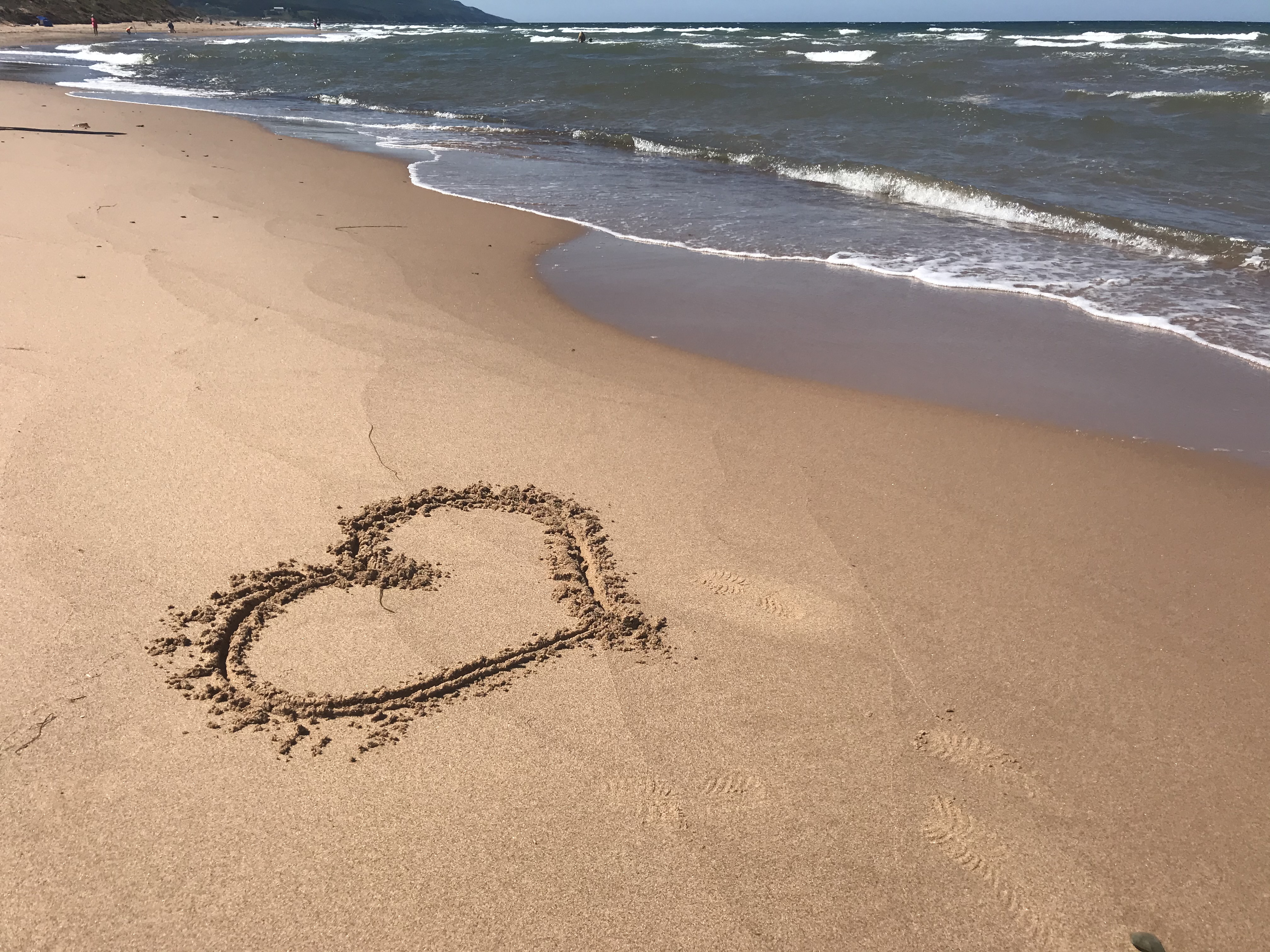
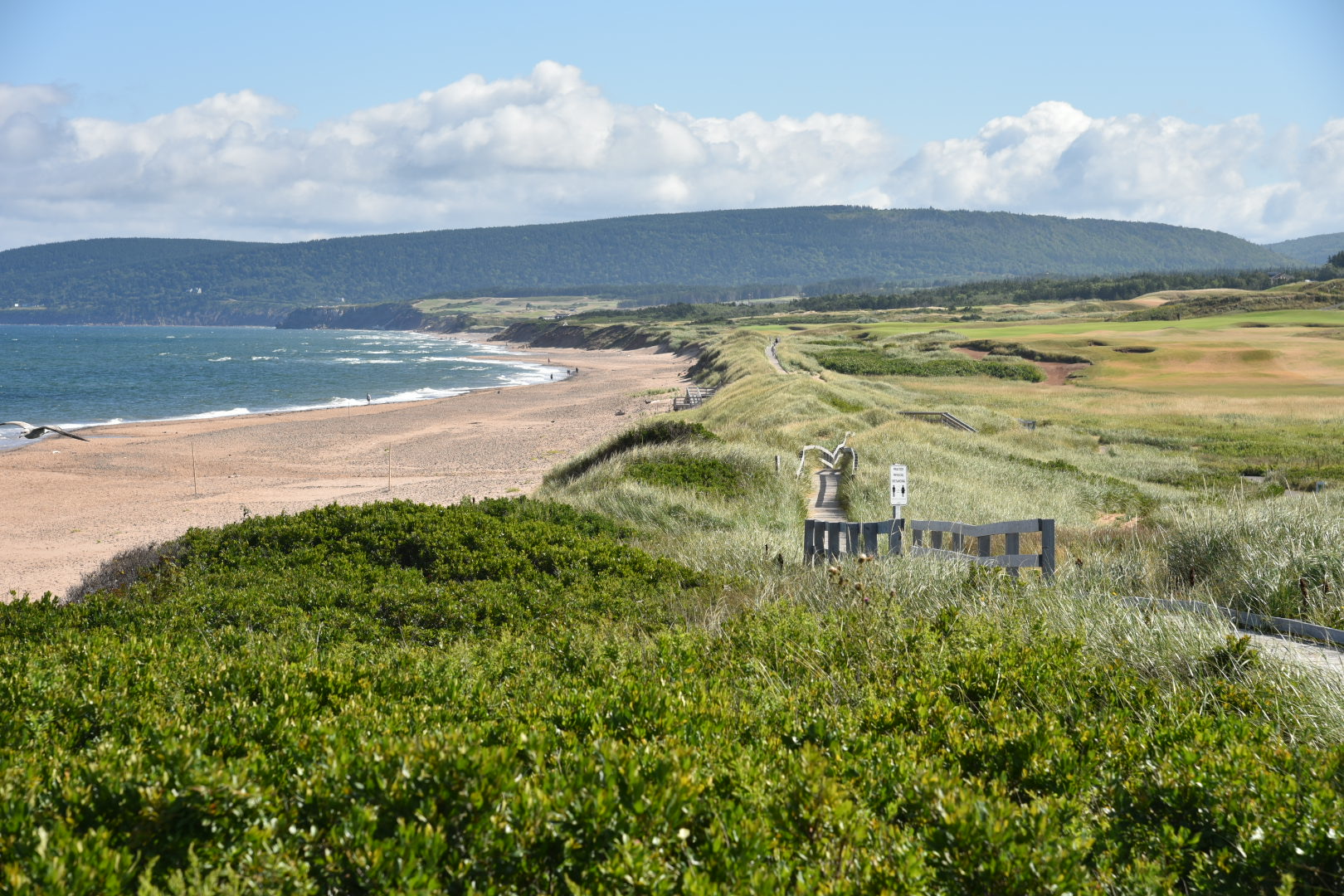
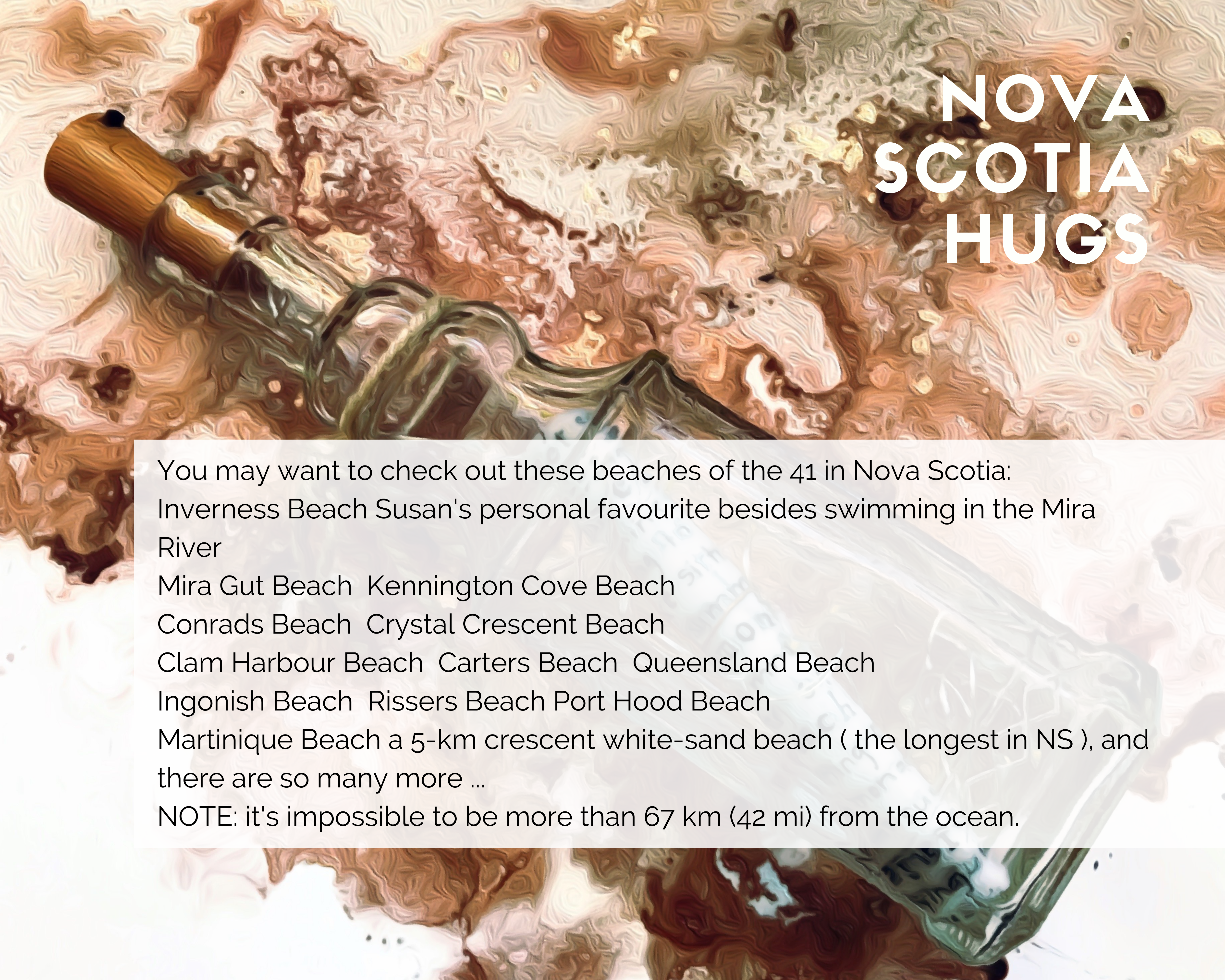
Cabot Links in Inverness, (2 hours away from Sydney) is an amazing place for golfers, and it’s also the location of one of our favourite beaches in Nova Scotia. You can spend hours walking up and down this wonderful sandy beach.
There is nothing like the smell of the ocean, the sound of the waves and warm sand beneath your feet while spending time walking and chatting with one of your best friends.
The Skyline Trail is a 6.5 km hike that is definitely worth the effort; the top provides the most spectacular views. We guarantee this hike will not disappoint!
The charming and lovely village of Baddeck is a sweet place to go for a day visit – you can have an experience out on the water in one of the excursion boats, take the ferry over to Kidston Island to wander the trails, or picnic on the beach, meander down the main street and stop in the shops and boutiques, or enjoy a very fresh lobster dinner at one of several restaurants. Don’t forget to visit the Alexander Graham Bell Museum – there is so much history to read about and absorb, along with physical copies of his experimental kites and many other projects!
The village of Ingonish, on the Cabot Trail, offers a great place to relax – there’s a federal Park; hiking trails; and sandy beaches where you can swim in the ocean. Ski Cape Smokey offers the only gondola ride in Cape Breton, and while there isn’t a café or place to eat at the top, the scenery is unparalleled! Or stay a day or two at the renowned Keltic Lodge Resort and Spa, either in the main Lodge or rent one of their darling cottages. The views, both on the drive to Ingonish and in the area, are second to none!
Are you driving around Cape Breton? If so, be sure to take Highway 19, just as you come across the Causeway. It’s a delightful drive along the coast, again providing many areas for spectacular photos. There are some lovely, small villages to explore along the way, such as Port Hood, which has 5 sandy beaches that are said to be the warmest water north of the Carolinas. Leaving Port Hood, take the drive along the Colindale Road and you will come to a great fishing spot along the river and at the bridge. Another wonderful village is Mabou, home of the singing Rankin family; have lunch at the Red Shoe Pub, or stay at the Mabou River Inn or the Duncreigan Country Inn. Each Sunday from June to October, the Mabou Farmer’s Market is open from 11 to 2 pm. Here you will find some fabulous fresh produce from surrounding farms and gardens, as well as some scrumptious prepared meals to take out!
Another relaxing and calming place to visit is Gampo Abbey, a Buddhist monastery at Pleasant Bay on the Cabot Trail. Here you can relax, walk the grounds of the Abbey, hike the trails, and visit the Stupa of Enlightenment. You can stop and chat with any of the monastics you encounter on your rambles. However, due to the Abbey’s monastic schedule, tours of the inside of the Abbey are not offered at this time.
If you love to go birding and see them in their natural environment, a stop at the Bird Island Tours is a must. The boat takes you out to the Bird Islands, for approximately three hours, and you will be up, close and personal with the many inhabitants of the two islands – gannets, puffins, eagles, cormorants, kittiwakes, swallows, gulls, and other bird species – as well as many seals in the water, who love to follow along with the boat! Photographers will have so many opportunities to get amazing pictures for their collections!
The Village of Iona has one of the most historical places in Cape Breton, the Highland Village. It’s dubbed as a ‘living history museum and folklore center that celebrates the stories, language, and culture of Cape Breton’s Gaelic heritage. As you walk around the property, you will experience the period historic buildings, filled with appropriate artifacts, along with a museum. It’s a great place to spend an afternoon – once again, the views from the hill are stunning!
Sydneyis the historic capital of Cape Breton. If you didn’t stop there on the way through to Louisbourg, then turn around and go back; and make sure you have a bite at Flavour on the Water, Governor’s Pub, or the many great eateries. You could do a little shopping along Charlotte Street or stroll along the harbor boardwalk. If the cruise ships are in, there is usually a big market by the Big Fiddle for you to enjoy. And if you are in Sydney on Saturday mornings, you can check out the Farmers Market. There are several museums to wander through, and lots of places that have wonderful local entertainment (check out this guide).
Cheticamp is a place rich in Acadian culture, and famous for its hooked rugs and décorative pieces. Be sure to stop by the Doryman for some live music, creating memories with your friends!
Taken along the Mira River by @sspellmancann
The Cabot Trail is a must, but in the fall it is glorious. The 300 km loop of the trail, weaves around the incredible coast of Cape Breton with magnificent views. There are so many stops along the way, too numerous to cover them all; be sure to check with a tourist information stop before you go around. There are hiking trails in the highlands; waterfalls; historic sites; craft shops; and quaint restaurants. An experience not to be missed and I (Helen) once went around on a motorcycle, and my younger sister accomplished this on a bicycle!
We guarantee Cape Breton, and all of Nova Scotia with more than 7,400 kilometers of coastline, will hold a place in your heart forever; your heartstrings will pull you back, again and again, to see all the wonderful things this incredible place has to offer – lively music, rousing ceilidhs, warm-hearted people, stunning vistas, and so much more.
Don’t leave home without the Doers and Dreamers guide; it will give you all the information you need to find out what is happening wherever you travel throughout the Province. So be careful as Cape Breton, Canada’s best-kept secret will be calling your name, and you’ll most definitely want it to be your starting point!
During stressful times it is not uncommon for us to be impacted by psychosocial factors such as excessive worry or sadness. For those who have a diagnosed mental illness, additional stresses further exacerbate the condition. As a result of excessive worry we may develop habitual, exaggerated, or irrational thought patterns called cognitive distortions.
We all have these distortions. They are normal. However, they can cause us to perceive reality inaccurately. In other words, our brain is tricking us. Instead of seeing ourselves as calm and capable, we see ourselves as just the opposite. Our beliefs become negatively distorted and we process all thoughts through a negative filter. However, if we learn to challenge and ultimately change these negative thoughts, we cannot only change how we think , but also how we feel. How do we change these cognitive distortions? First, we need to understand what these distortions are and if any of these distortions apply specifically to you. Are you tending to view things more negatively than they really are? View the following 10 most common distortions and decide which ones you may be using most frequently.
All or Nothing Thinking (Black and white thinking) You might say to yourself : “This day is awful. I can’t do anything fun anymore. I feel like life is so difficult. What’s the point of getting out of bed? Nothing ever works out the way I want it to.”
Overgeneralization: (Attributing a negative outcome based on one single event or incident) “I tried to practice music on my own, but I just could not focus. Everyone else seems to be able to do it. It must just be me who can’t. I failed when I tried to do my Biology . What’s the use of trying? I will fail every time I try.
Discounting The Positive (Believing the positive attributes you possess have no value) “ My teacher told me I did really well in the last practice, but I know he’s just saying this to make me feel better because I have been feeling sad lately.”
Mind Reading : (Assuming that you know what other people are thinking without having any evidence) “My dad seemed really quiet today. He didn’t even say good morning. I think he’s angry with me.”
Fortune Telling; (Jumping to conclusions and predicting future events based on a past events) “I messed up on the last practice. I’m never going to get this music piece correct.”
Magnification (Catastrophizing) or Minimizing: (Binocular Trick: When viewing through binoculars, it allows us only to focus on what we are looking for. We either magnify or zero in on a specific feature, not allowing for a true perspective or view. ) “I only got a 60% on my last quiz. I’m probably going to fail this course. I got 90% on all my tests but I am really unsure whether I will have the marks needed to get into my university program of choice.”
Emotional Reasoning; (Allowing our feelings to interpret our reality. I feel it, therefore it must be true.) “I feel my life is totally out of control because of x .” “I feel worried, therefore I must have anxiety. I feel sad, therefore I must be depressed.”
Should Statements; (Stop Shoulding on Yourself!) “I should be helping out more at home during this difficult time.” Or: “ My parents tell me every day I should feel lucky because others have it a lot worse than I do. ”I should be doing better in school even though life is very difficult right now. “I should get 90”s and if I don’t I am a failure.”
Labeling and Mislabeling; (Attributing one error or decision as a specific trait) “I messed up on the last question on the test. It was so easy. I am such an idiot.”
Personalization. (Blaming yourself for everything that may go wrong. It’s not all about you. Others may own a part or all of the situation) “My parents seem to be arguing a lot more. Maybe I’m irritating them. I need to be better so they don’t argue so much.” Or “My relationship ended because I was not exciting enough and could not spend more time with _____ . “
You may have recognized yourself in some of these distortions. By now you will probably have identified the ones that ring true for you. So in order to remain calm and capable, you must remind yourself of how counter productive these distortions can be. Instead, take time to reframe your thoughts so they more clearly reflect the true picture. Take each cognitive distortion find an example that you presently do and find ways to reframe each one.
Enlist friends, family members, coaches, teachers or anyone you trust to help you better challenge these distortions. This provides for a wider view, as opposed to a narrow lens approach. You can now see yourself from a whole new perspective, as a calm, capable, young person, better able to manage the ever-changing world around you.
If you are a School Counsellor you will want to read this report. The jobs of tomorrow matter. Supporting youth in their journey to understanding their needed skills will be most helpful.
Whether you are an educator or not please take the time to reflect on this film. Courage, compassion, honour, love, and empathy are but a few words I have to describe the feelings I had watching this film. We see these kids every day in our schools, but do we really see them.
I am an optimist and for the most part it seems I have always been that way. It is possible that 25-35% of optimistic traits may be inherited. William Chopik PhD. associate professor of psychology and director of the Close Relationships Lab at Michigan State University found in his twin studies that 25% of optimism is inherited. That said environmental factors do indeed matter.
So what have I done in my life to remain optimistic?
I work hard at starting my day in a positive way with a positive mindset. It’s not always easy, but living life finding the many ways to be more positive matters to me.
Friendships are essential to my well being. I mostly surround myself with people who look on the brighter side of life.
I recognize that what I say and do is up to me.
I accept and feel my emotions as much as possible. Reframing and refocusing when necessary. I use self-talk to shift my attitude when needed.
I support others paying it forward as often as possible. I reach out for support to assist me in life.
I recognize and focus on all the things I am grateful for on a regular basis.
I focus on living each day to the fullest as best I can. Truly living life one day at a time makes life so much easier allowing me to let go of so many things.
I don’t dwell on the negative possibilities, I find ways to see the positive in most situations.
I appreciate the people around me and let them know. I take the time to write a post card or letter, send a note or tell someones boss what a difference they make as often as possible.
I hang on to hope at every given moment.
Has life always been easy? No, like most people I have experienced many challenges of life, but I choose to find ways to look for what I can learn from every experience.
I remember when I was first diagnosed with keratoconus and my ophthalmologist at the time said I could go blind (a more pessimistic view as there are so many developments to assist people with pellucid marginal degeneration as I was later diagnosed with and could be more in the future) and I thought to myself well if I need a seeing eye dog and that’s the worst that happens I can live with that. That was over ten years ago and I am not blind. I have had many eye challenges. I had a year where I could not drive, I have had many moments where seeing was a real challenge, but for today I can see well with sclerals. I know I will need a corneal transplant, but life is full of twists and turns and I choose to find ways to make the most of life.
My wish for all of you in this ever changing world is that you cultivate a little more optimism in your life so that you have an opportunity to live longer and more positively right up to the end no matter what life challenges you have to face.
Just for today I plan on heading for the beach no matter how sunny it is.


















 Counsellor Talk : Connecting with those who want to make a difference.